Coffee Cupping Fundamentals: A Beginner-Friendly Guide to Tasting Coffee Like a Pro
Getting your start in the world of specialty coffee can feel daunting. Everyone is using coffee jargon, there’s an endless stream of information, and then there are those strange rituals you’ve seen where people gather around a table of steaming cups with spoons at the ready. Maybe you’ve wanted to ask about it…but didn’t want to be that person.
Trust me – we’ve all been there. Every coffee professional has been there. That’s why Genuine Origin works so hard to demystify all things coffee. We want to make coffee more accessible on every level whether you’re buying your next green coffee or just trying to learn more about it.
So, let’s talk about one of those “strange rituals”: coffee cupping.
What Is Coffee Cupping? A Simple Definition
Coffee cupping is a standardized practice used across the coffee industry to evaluate quality, compare different coffees, and develop roast profiles. Cuppers grind measured samples, brew them directly in cups, and taste them as they cool, slurping loudly with spoons to aerate the coffee and expose more flavor.
Cupping can be formal and scientific, like in a QC lab, or casual and quick, like sampling coffees in paper cups because you’re short on time. The principle is mostly the same, but the method can vary.
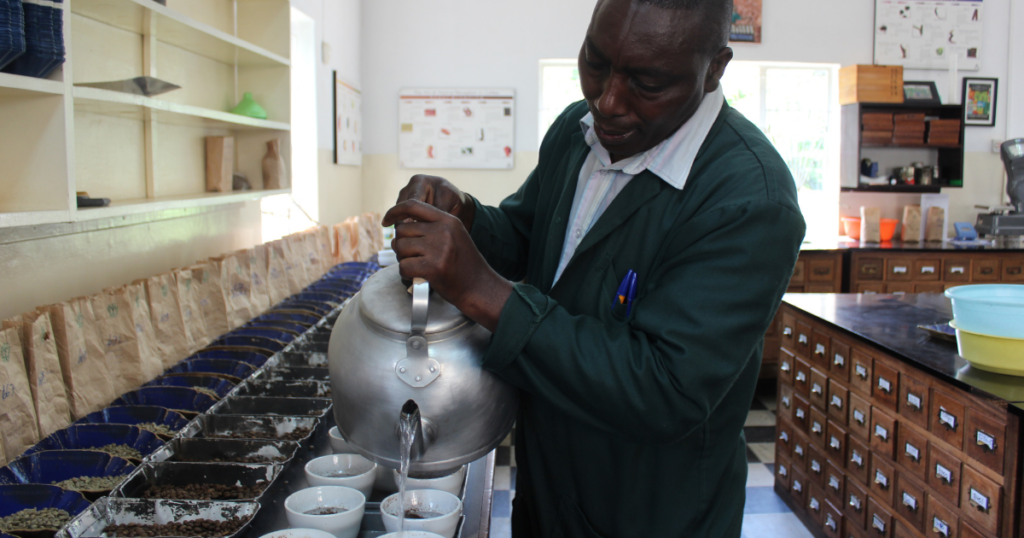
QC lab in Kenya setting up a table to be cupped
Why Cup Coffee? The Purpose of the Process
Cupping is the most efficient way to evaluate multiple coffees at once. Sure, you can brew a dozen pourovers or pull a dozen espresso shots, but – in my opinion – it’s better to trust the process. Cupping keeps variables more consistent:
- Each sample is prepared the same way
- Brewing errors are minimized
- Flaws and defects are easier to spot
- Differences in flavor and aroma stand out clearly
- And – a fringe benefit – palate development happens faster
The cupping process is both a quality control tool and one of the best educational methods for anyone learning about specialty coffee.
How to Cup Coffee: My Step‑by‑Step Method
Put simply, cupping coffee starts with grinding beans, placing them in a bowl/cup, adding water, and tasting the coffee as it cools. Diving deeper, here’s what you need and the steps to do it right:
Coffee Cupping Equipment Checklist
- Coffee samples
- Cupping bowls or cups
- Spoons (a nice, deep bowl is preferable)
- Grinder
- Scale
- Hot water kettle
- Filtered water
- Timer
Step‑by‑Step Cupping Instructions
- Add 10g whole bean coffee per cup
- Grind each sample into its cup (use a drip/V60 grind)
- Assess the dry fragrance by smelling each ground sample in its cup
- Heat water; once off‑boil, start a timer and add 160g water to each cup
- Assess the wet aroma by passing your nose over each cup (get close!)
- At 4 minutes, use the back of your spoon to break the crust and inhale
- Rinse your spoon between cups
- At 4:30, clean the cups by removing floating grounds
- Wait until 8–10 minutes for the coffee to cool then start tasting
- Gently dip your spoon into the cup. Slurp loudly to aerate the coffee during tasting.
- Take notes! What flavors are you getting? Body, sweetness, acidity, etc.? Write it all down.
As you cup the coffee, pay attention to how it changes as it cools. Some flavors show up when the coffee is warm or even room temp. I always like to pay attention to how a coffee makes your mouth and tongue feel. This is another indicator of quality, quality of roast, and potential defects.
Don’t be shy: there are no wrong answers when it comes to cupping coffee and most people are surprised at how much they notice right off the bat.
Sanitary note: When cupping with others, some people prefer spoon‑to‑spoon tasting or keeping a separate “tasting cup” to avoid dipping used spoons back into the bowl.
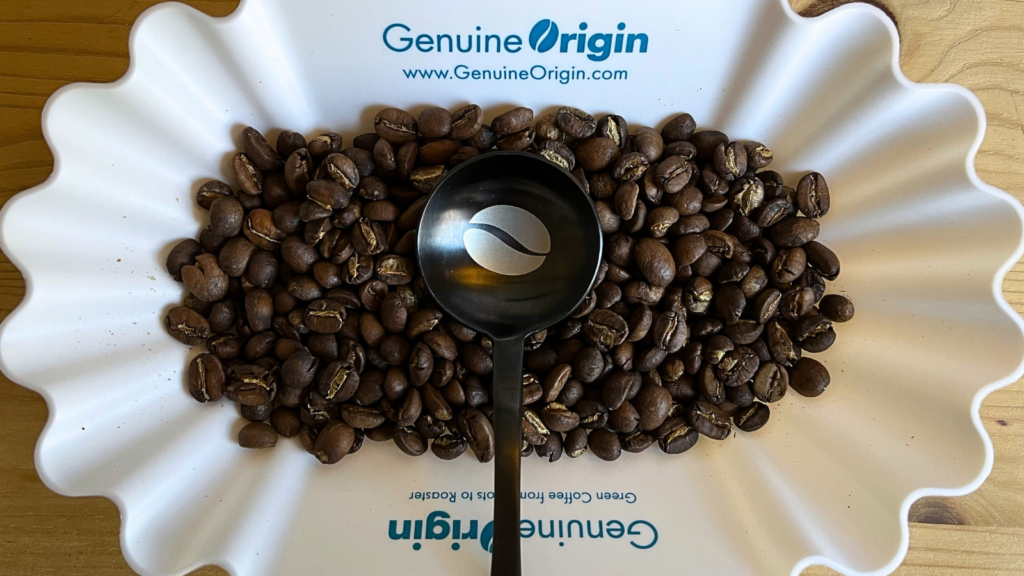
Genuine Origin cupping tray, custom Akiva cupping spoon & roasted coffee beans
Different Applications of Coffee Cupping
1. QC Lab Cupping Coffee (Green Buyers / Quality Control)
Cupping is serious business. It’s the first line of defense in knowing what you’re buying. Here at Genuine Origin, our Q-graders evaluate pre‑ship samples before we commit to large contracts. The lab uses the SCA Coffee Cupping Form, which scores coffees (typically 80–90 for specialty) based on aroma, flavor, acidity, sweetness, balance, and defects. It’s a highly structured system that ensures a shared language around quality.
2. Cupping Coffee as a Head Roaster
Most of my cupping experience comes from working as a Head Roaster and Director of Coffee. In this role, cupping helps with:
- Selecting green coffee from importers
- Building a seasonal menu
- Ensuring roast consistency
- Training staff
You cup samples before committing to purchases, cup production batches for quality, and often cup with your team for education.
3. Staff or Café Cuppings
Cafes will often hold staff cuppings when bringing in new coffees. This practice serves to educate baristas and other employees, so they can help customers more effectively. Many multiroaster cafes will hold cuppings with various selections from different roasting companies in order to select which coffee they serve next. Some cafés even host public cuppings, which are an amazing way to build a loyal community and get your customers even more excited about coffee.
4. Coffee Cuppings at Home
Cupping at home is incredibly valuable for:
- Comparing coffees side‑by‑side
- Learning how origin affects flavor
- Understanding roast development
- Building your sensory vocabulary
Buy several different bags, line them up, and taste them together — you’ll be surprised how much your palate picks up.
Cup, Rinse, Repeat: The Path to a Stronger Palate
The key to becoming better at cupping coffee is simple: repetition. Whether you’re in a lab, a roastery, or your kitchen, each cupping session builds your awareness and enhances your ability to describe what you taste.
Taste the coffee and write down the first thing that comes to mind. Remember, there are no wrong answers, only observations that sharpen with practice.