



Roast Summit Portland 2026: A Coffee Roaster’s Guide
Roast Magazine held their second Roast Summit of 2026 in Portland, Oregon this Oct 1 -2. Portland was the original site of the first Roast Summit events, so it always serves as a sort of homecoming. After attending Roast Summit Chicago back in May, I was excited to see it happen in Portland. Coffee has a rich history in the Pacific Northwest and roasters come out from all over to attend the event.
Brought to you by Roast Magazine and Diedrich Roasters, Roast Summit Portland was a two-day exploration of all things coffee. There were presentations from coffee industry leaders, roaster demonstrations, sensory activites, panels, and even social events designed to connect people.
Here’s what the Genuine Origin did and saw at Roast Summit Portland.
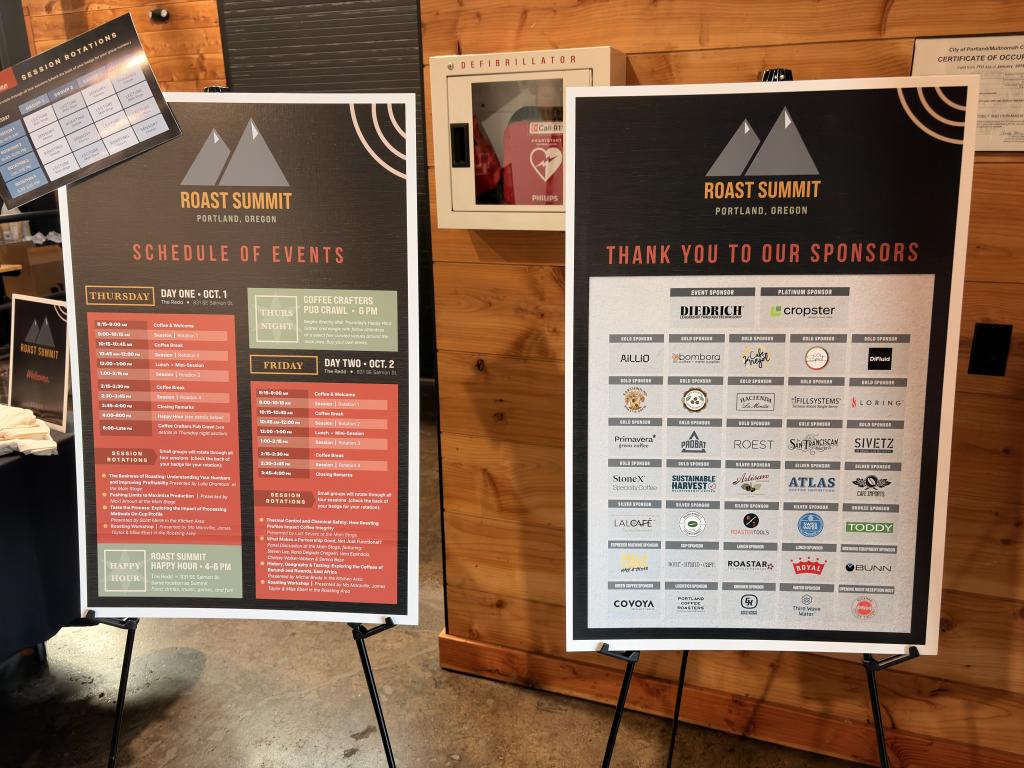
The Schedule for Roast Summit Portland 2026
Getting Started at Roast Summit Portland
If you haven’t attended a Roast Summit yet, it’s one of the best places for networking in the coffee industry. You’ll see old faces and make new friends, all while learning about niche elements of the coffee along the way. The event was held at the Redd on Salmon Street, a beautiful and spacious venue that used to be an iron works, and was kicked off by Washington’s Kafiex. Seidy Selivanow, founder of Kafiex, worked the espresso machine and got attendees their first critical shot of caffeine.
Sponsor booths line the walls of Roast Summit, and this year’s highlight was Swiss Water. The Canadian decaffeination company offered up delicious Ethiopian, Colombia, Costa Rican and Honduras decaf coffees brewed on V60s.
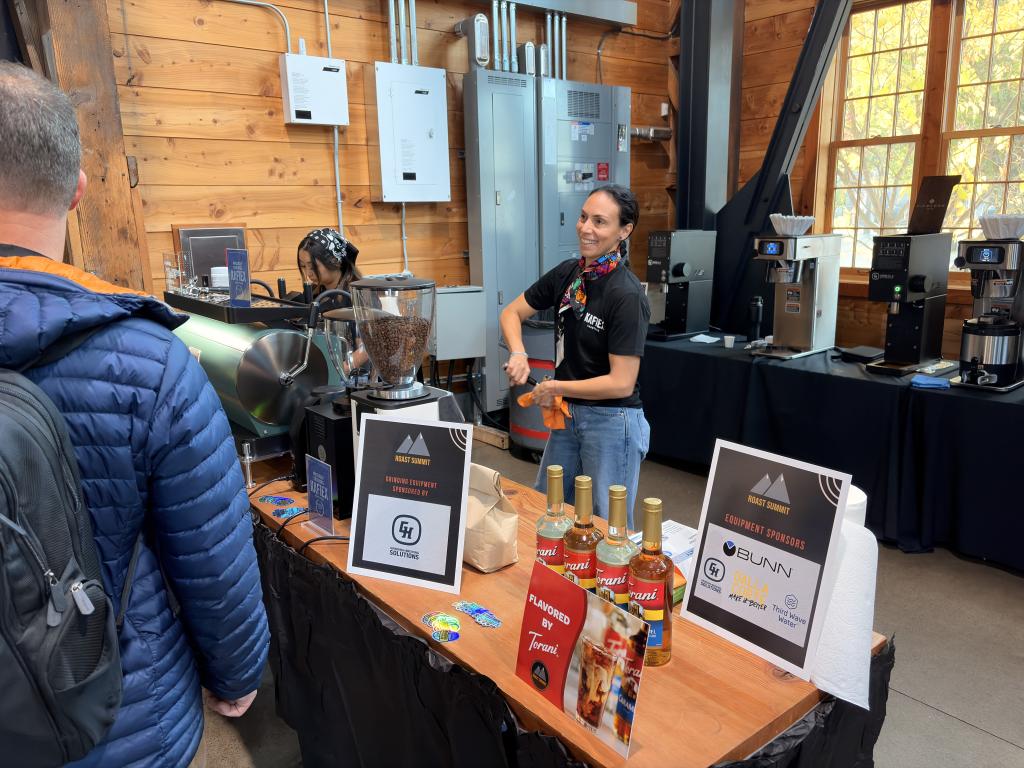
Seidy Selivanow of Kafiex kicking off the Summit with espresso service
Hands-on Roasting Time
One of the greatest appeals of attending a Roast Summit is getting your hands on a variety of roasters. And with Loring, Roest, Aillio, Ikawa, Diedrich, San Franciscan, and Nucleus Link all attending, there were no bad choices. Half of the Roast Summit was dedicated to demonstrations on these machines and the ability to experiment, compare, and contrast. Due to the size and shape of the space, the roasters were actually set up and vented outside. It was a cool day in Portland, so it took a while for the machines to heat up to normal roasting temperature. This made for a very fun education in the importance of warmup cycles and ambient temperature in a roastery.
Key Roasting Gear Takeaways
- Roest just launched their P3000, their first production roaster. It can handle up to 3kg batches
- Loring brought out their rarely seen 1.5kg Lab Roaster
- Aillio launched a new and improved RoastWorld software, a cloud based service for data logging and sharing profiles among users
- The Nucleus Link came out swinging. They presented a sample roaster at an affordable price point
-
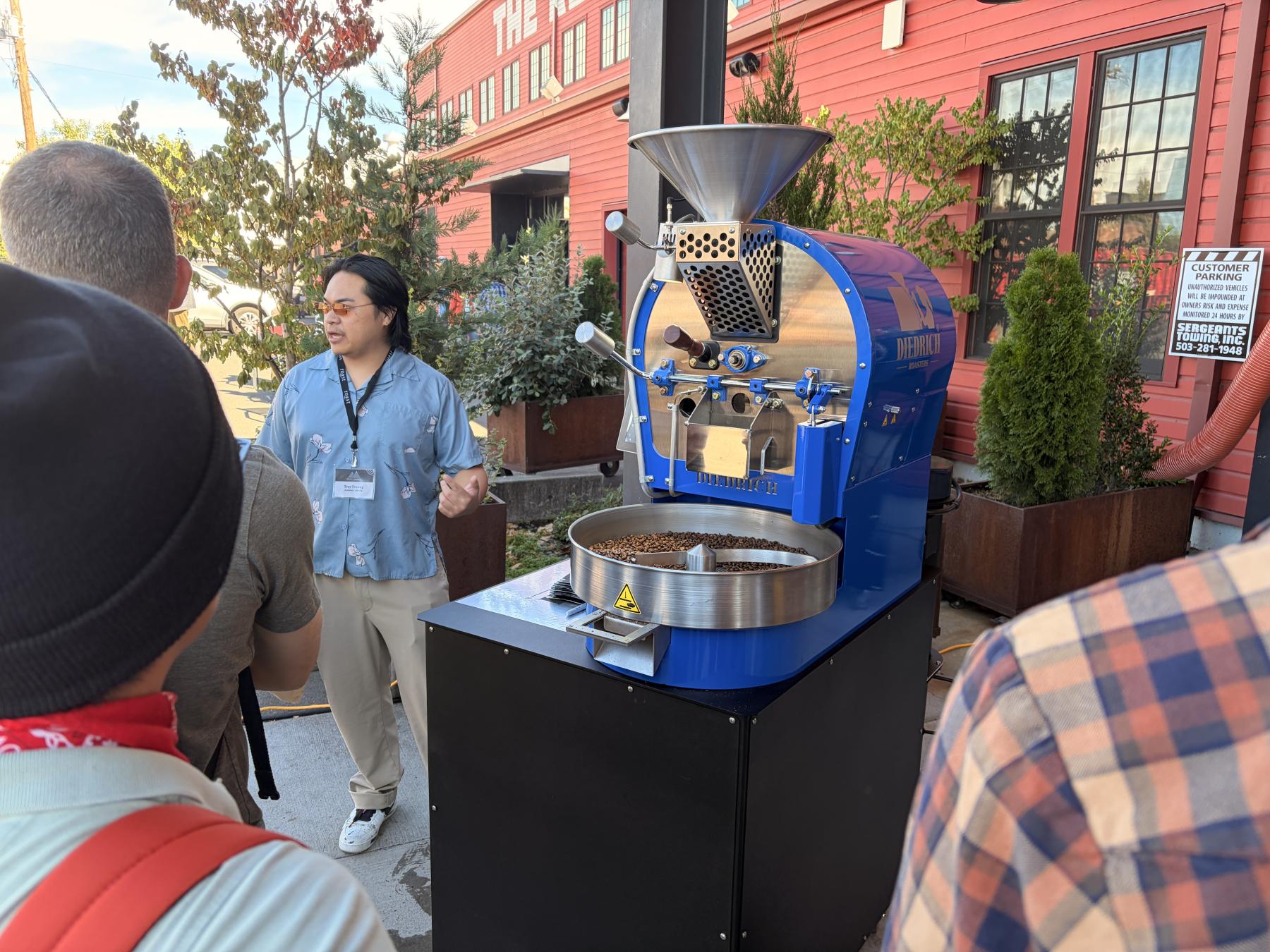
- Demonstrating the Diedrich DR-3 roaster
-
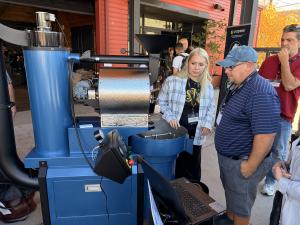
- Roasting on the San Franciscan 3kg
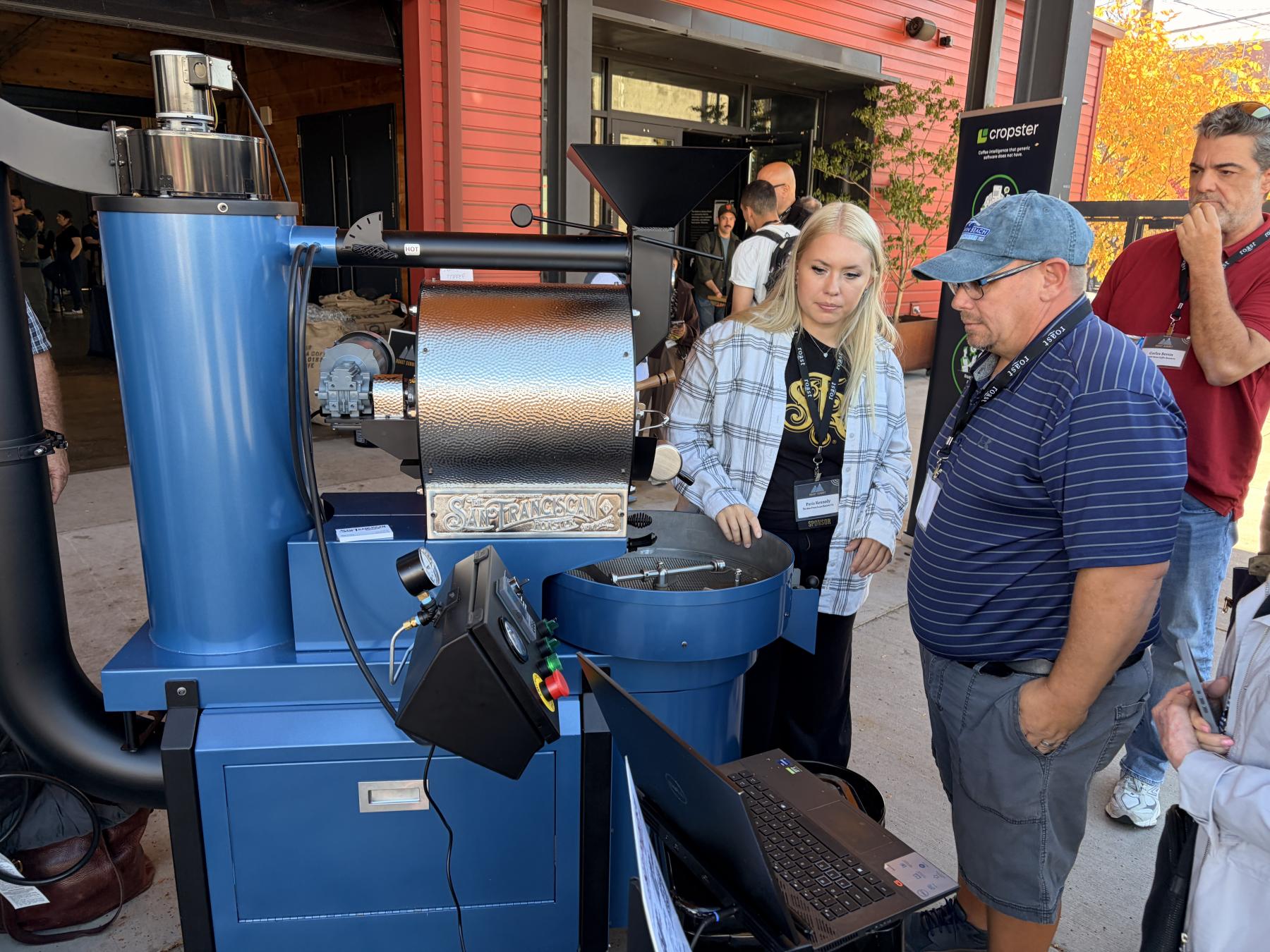
I spent most of my time talking to Roest and Aillio, since both of these companies make roasters that Genuine Origin customers are often interested in buying. While on the more expensive end, Roest P3000 sample roasters offers a lot of control in both roasting and data logging. I would compare the Roest P3000 to the likes of the South Korean Stronghold brand, in that they’re electric and some of the most technologically advanced in the ability to control roasts.
The Aillio 1kg Bullet roasters were more affordable. The company was demonstrating the new Bullet R2 Pro, which features improved real-time infared bean sensors and an automatic cooling tray. This little drum roaster is seriously overpowered. It could roast for a small cafe operation or even run a micro-roastery doing e-commerce and wholesale. With this new machine, Aillio also offers an optimized version of the RoastWorld software. This allows roasters to connect with other roasters in the Aillio community and share roast profiles, experience, and advice.
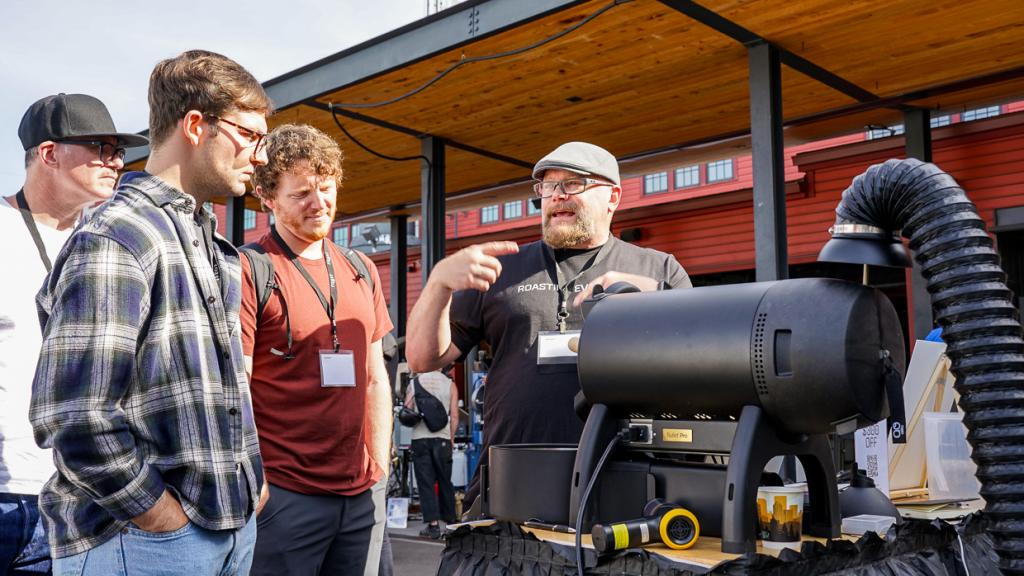
Myself and some others listening to Aillio talk about the new R2 Pro
Sensory Activities
Every Roast Summit offers several sensory activities in tandem with roasting and presentations. It’s a good break from a stream of education to be able to stop and taste some coffees to go along with all of the information being absorbed. This Roast Summit had two main sensory activities: exploring the impact of processing on cup profile; and tasting the lesser known coffees of East Africa in Rwanda & Burundi.
In the first sensory activity we were presented did a blind tasting of five coffees while trying to match each coffee we tasted to a processing method. I thought I was out of practice, but I received a perfect score! Participants discussed among their groups and we were educated on how specific processing methods impart particular flavors on coffees, and how each of the processing methods is done. Something I didn’t expect: we tasted a hop co-ferment, which tasted – in my opinion – like Lemon Pledge.
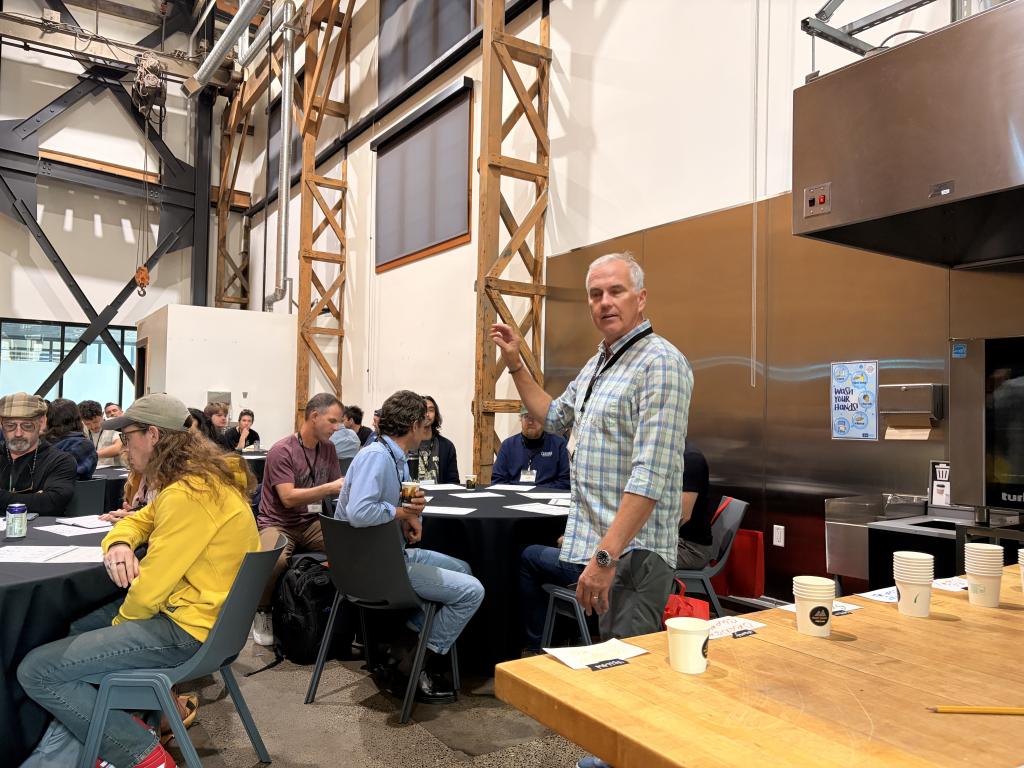
Scott Merle of La Minita speaking on processing
Sensory exercise number two was all about tasting the lesser known coffees of East Africa. While Ethiopia and Kenya are easily the most popular origins in Africa, this presentation aimed at educating tasters about the history of coffee in Burundi and Rwanda. We tasted both origins at various roast levels and conversed about the similarities and differences between these origins and others.
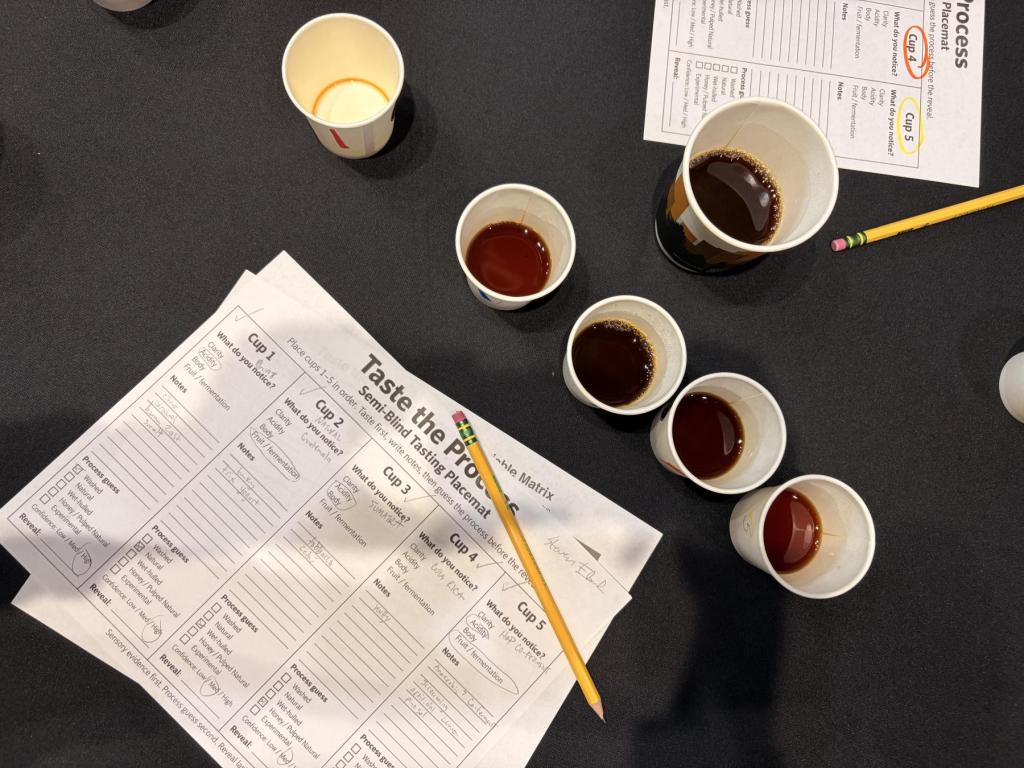
Trying to decipher processing method by flavor
Roast Summit Speakers
The speakers at Roast Summit Portland covered a broad range of topics, like: The Business of Roasting and Profitability; Pushing Production Limits; Thermal Control and Chemical Safety; and a panel discussion on what makes partnerships good. Because the presentations were information dense, here are the highlights:
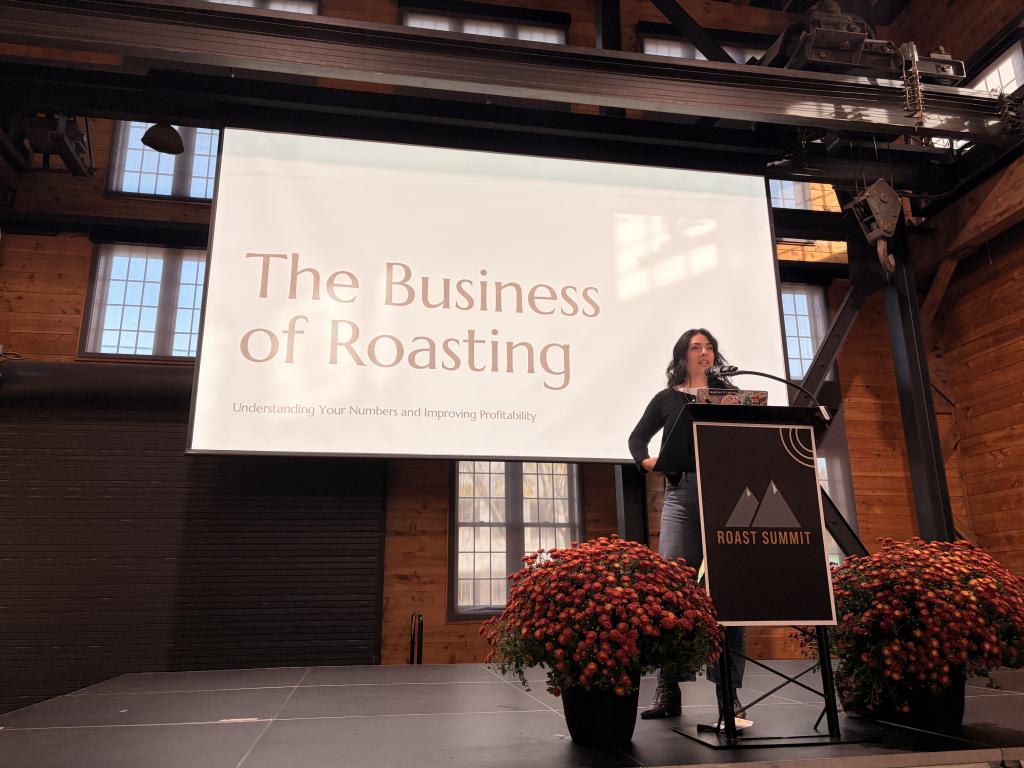
Laila Ghambari of Guilder Coffee
The Business of Roasting: Understanding Your Numbers and Improving Profitability
Laila Ghambari, owner of Guilder Coffee and 2014 US Barista Champion, gave a presentation on something that isn’t often covered. Sharing with the audience a profit & loss sheet from her own business, she went through line by line explaining each segment of a multi-channel coffee and roasting business with tips on how to optimize. This was eye-opening for many, including myself. A couple of the main points surprised me. Roasteries often lose money on wholesale. The Pro Tip: roasters should avoid equipment lending and the easiest way to increase profit is to increase the average spend of current customers – instead of targeting new ones.
What Makes a Partnership Good, Not Just Functional?
Moderated by Steven Lee of Pocketknife Consulting, this panel discussion featured Chelsey Walker-Watson of Atlas Importers, Serena Beze of StoneX, Iliana Delgado Chegwin of Why Not Coffee, and Vera Espindola of Kua’nu Raices Agrícolas Consulting. The session sought to challenge common assumptions about coffee partnerships and examine the realities of origin sourcing relationships. Drawing on a wide range of experiences, the panelists moved beyond marketing narratives to discuss the complexities, tradeoffs, and challenges producers face in today’s coffee market. For roasters, green coffee buyers, and consumers alike, the discussion provided valuable insight into the often-overlooked work required to build and sustain meaningful partnerships at origin.
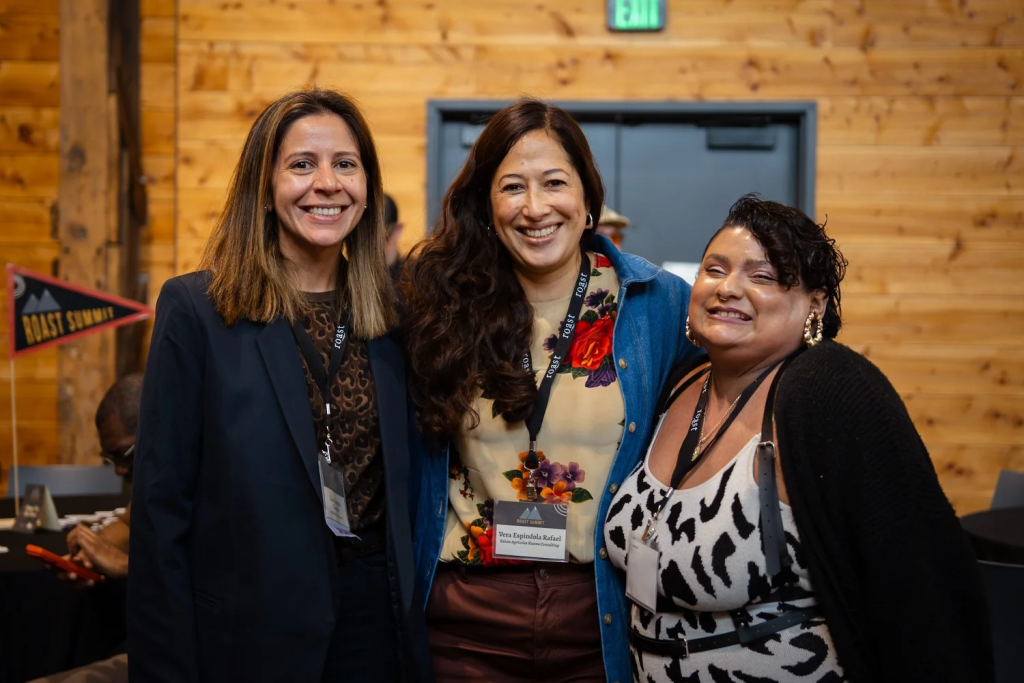
Iliana Delgado Chegwin, Vera Espindola, and Genuine Origin’s Alexandra Zepeda at Roast Summit Portland
See You at Roast Summit 2027
Roast Summit Portland was a tremendous success, and the Genuine Origin team is already looking forward to the next U.S.-based event in 2027. If you’re looking for hands-on roasting experience, meaningful conversations with industry experts, and thoughtfully curated networking events, Roast Summit delivers. It’s an opportunity to sharpen your skills, connect with fellow coffee professionals, and gain fresh perspectives on the craft and business of coffee.
Readers can explore Roast Magazine’s photo coverage of the Portland Roast Summit here. We hope to see you in 2027!
Portland: A Coffee Lover’s Dream
No trip to Portland would be complete without a coffee crawl. And, lucky for me, Genuine Origin’s own Jen Hurd, regional sales representative for the West Coast, is a denizen of Portland and took the time to show me around. Here are some cafes that are a must visit if readers are visiting PDX.
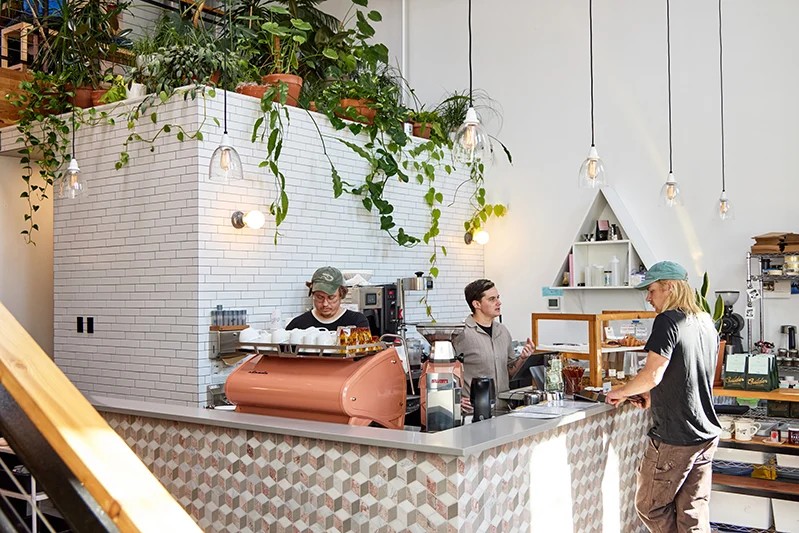
Guilder Coffee in the Alameda Neighborhood
Guilder Coffee
Guilder Coffee was founded in 2017, but changed ownership in 2024 following an acquisition by 2014 US Barista Champion and recent contestent on the game show The Floor, Laila Ghambari. Some might recognize the name as the fictional country from the Princess Bride (it was the sworn enemy of Florin). Guilder has three cafes plus a roastery. They are laser-focused on sourcing beautiful single-origin coffees and creating an equitable coffee ecosystem, from producer to barista to customer. The location I visited had a Scandanavian vibe and a cozy lofted space above the bar. It was great to visit this cafe because Laila spoke at the Roast Summit about the business of roasting and profitability.
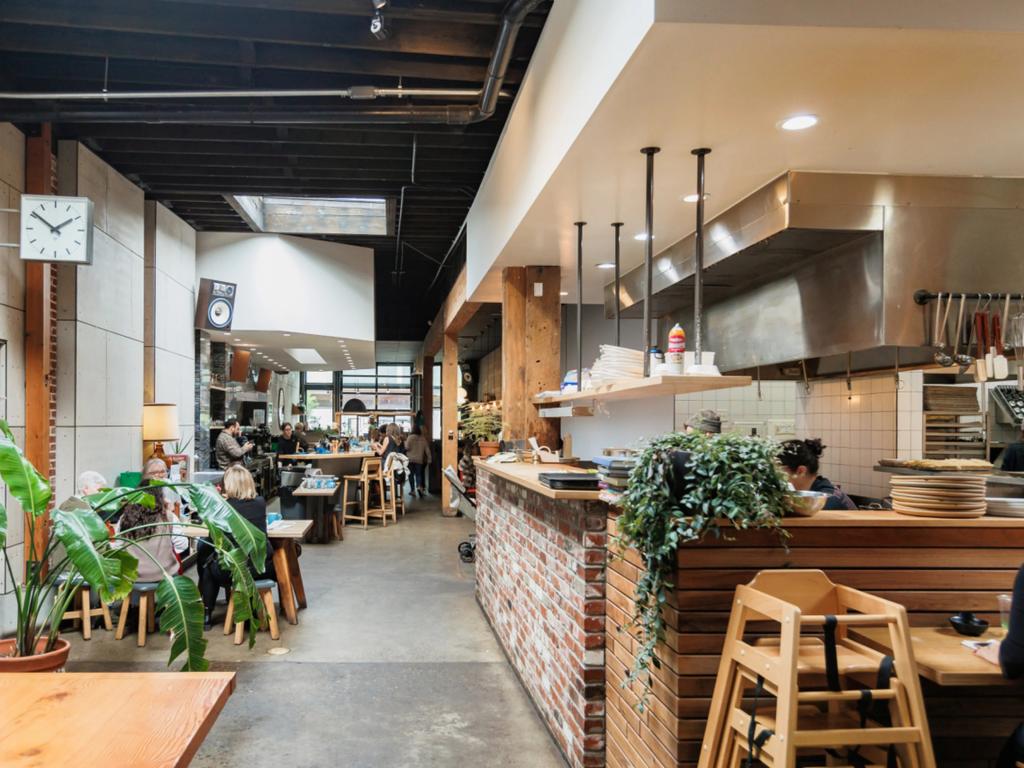
Proud Mary Coffee on Alberta Street
Proud Mary Coffee
Born in Melbourne, Australia, Proud Mary has been making waves in the U.S. coffee scene since opening its flagship American café in 2017. The roastery is known for its exceptional microlot offerings, which it organizes into flavor-based tiers: Mild, Curious, Wild, and Deluxe, with each category representing increasing rarity, complexity, and price.
At the highest end, some Deluxe coffees are so limited that only 300 grams may be available worldwide! Proud Mary is also renowned for its uncompromising approach to quality. The company was among the first roasters to experiment with freezing select green coffee lots to preserve freshness and extend the life of exceptional coffees. For coffee enthusiasts visiting Portland, Proud Mary is a must-see destination.
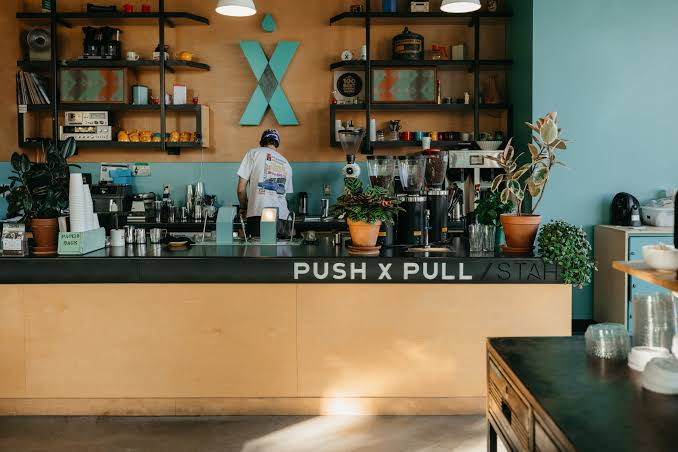
Push x Pull on Stark Street
Push x Pull
The slogan at Push x Pull is “the future is processing.” If you are someone who is into fruity, funky, fermenty, and experimental coffees, this is the cafe for you. It is rare that you find any washed coffees being sold or served. They focus on the unique, process forward coffees they can get their hands on. I was served a natural anaerobic Zambian(!) coffee, to my great surprise. Push x Pull is a staple of Portland and the afficionados seeking a more out-there experience.