Roast Summit Chicago 2026 brought coffee roasters together for hands-on coffee roasting, green coffee insights, and real-world experience with roasting machines.
Last week, Roast Magazine and Diedrich Roasters hosted the annual Roast Summit on May 28–29 at Firedancer Coffee Consultants in Schaumburg, IL, just outside Chicago. The event brought together roasters, green coffee buyers, and industry professionals from across the United States to learn, network, and deepen their approach to coffee roasting.
If you’ve ever wondered whether Roast Summit is worth attending, here’s a breakdown of what to expect and what makes it valuable.
What to Expect at Roast Summit
This was my first Roast Summit experience – long overdue, considering I spent nearly 10 years working as a coffee roaster in Chicago.
Roast Summit Chicago is typically hosted at Firedancer, an SCA-certified training campus. Over two full days, attendees rotate through hands-on roasting sessions, sensory training, and expert-led presentations. Beyond the structured schedule, the real value comes from the people.
From a networking standpoint, this event is perfect for coffee roasters. It’s a rare opportunity to connect with peers, exchange ideas, and learn directly from others working through similar challenges. I had conversations with roasters at all levels, made new connections, and reconnected with longtime industry friends.
How Roast Summit Works
At the beginning of the event, attendees are divided into four groups. You move to different segments of the two-day event with your group. My group – Group Four – rotated between roasting, presentations, sensory exercises, and coffee breaks, creating a well-balanced and highly interactive experience.
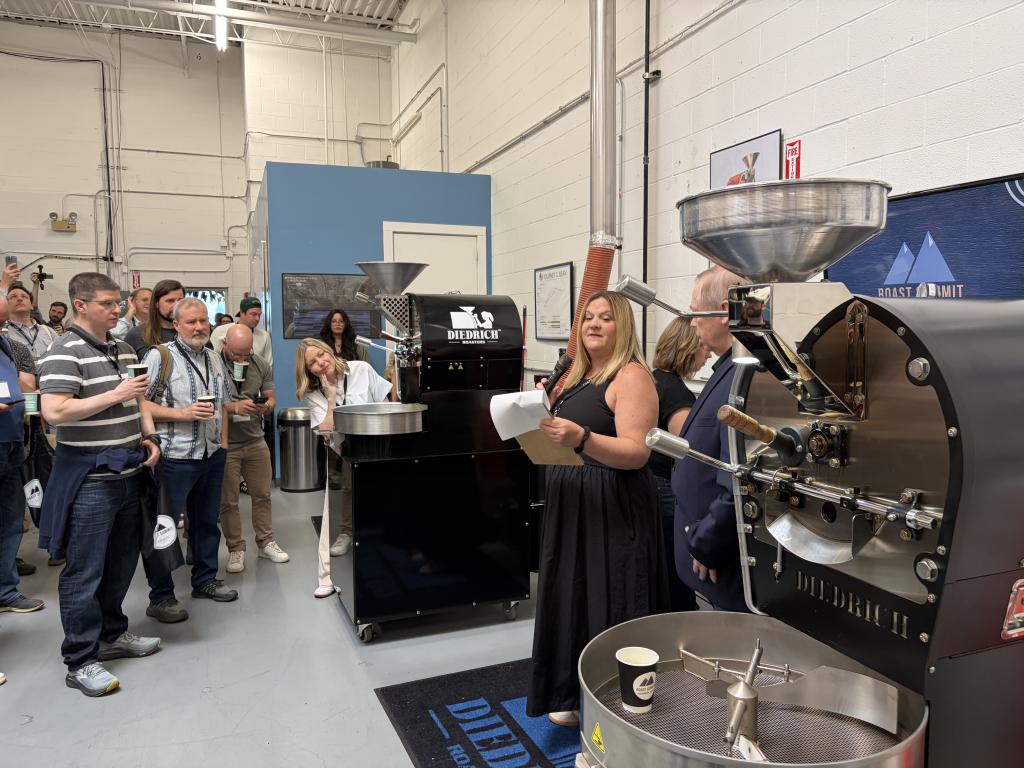
Roast Summit 2026 kicks off with a presentation from Diedrich
Hands-On Coffee Roasting Equipment at Roast Summit
One of the biggest draws of Roast Summit is access to roasting machines. For many roasters, getting meaningful time on different systems is difficult—so the chance to run multiple machines back-to-back is incredibly valuable.
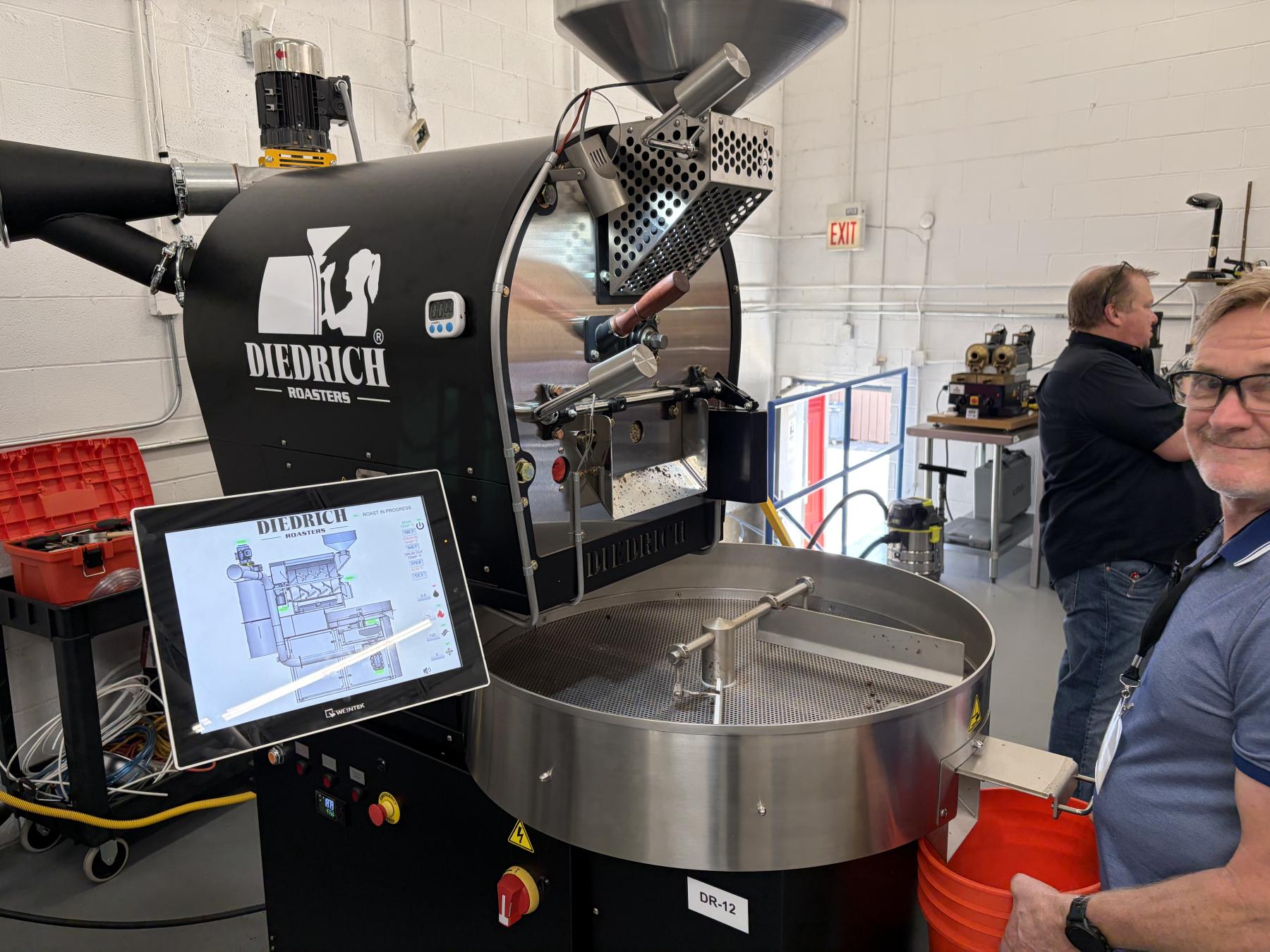
At Firedancer, we worked with a full lineup of Diedrich roasters, including the DR-3 Electric, IR-3, IR-5, IR-12, and DR-12. If you’re evaluating roasting equipment or refining your approach, this kind of access is hard to replicate.
Each group experimented with roast profiles to better understand how time, temperature, and machine design affect the final cup. My group spent a lot of time on three-kilo machines, which are especially relevant for many Genuine Origin customers.
Having spent years roasting on an IR-12, I was particularly interested in the smaller machines. The IR-5 stood out. The machine lacks automation, requiring manual gas adjustments with a dial. There’s something valuable about that level of control, especially for roasters looking to sharpen their instincts.
While Diedrich’s newer automation tools are helpful, the touchscreen interface can feel slightly clunky at times and isn’t always as responsive as you’d want for quick adjustments. Like any system, it requires some time to adapt.
A key takeaway from the roasting sessions was around electric roasting machines. They offer consistency and control, but come with trade-offs – longer warm-up times, more involved between-batch protocols, and slower roast cycles if charge temperatures aren’t dialed in. Running an electric system as your primary machine can also significantly impact operating costs.
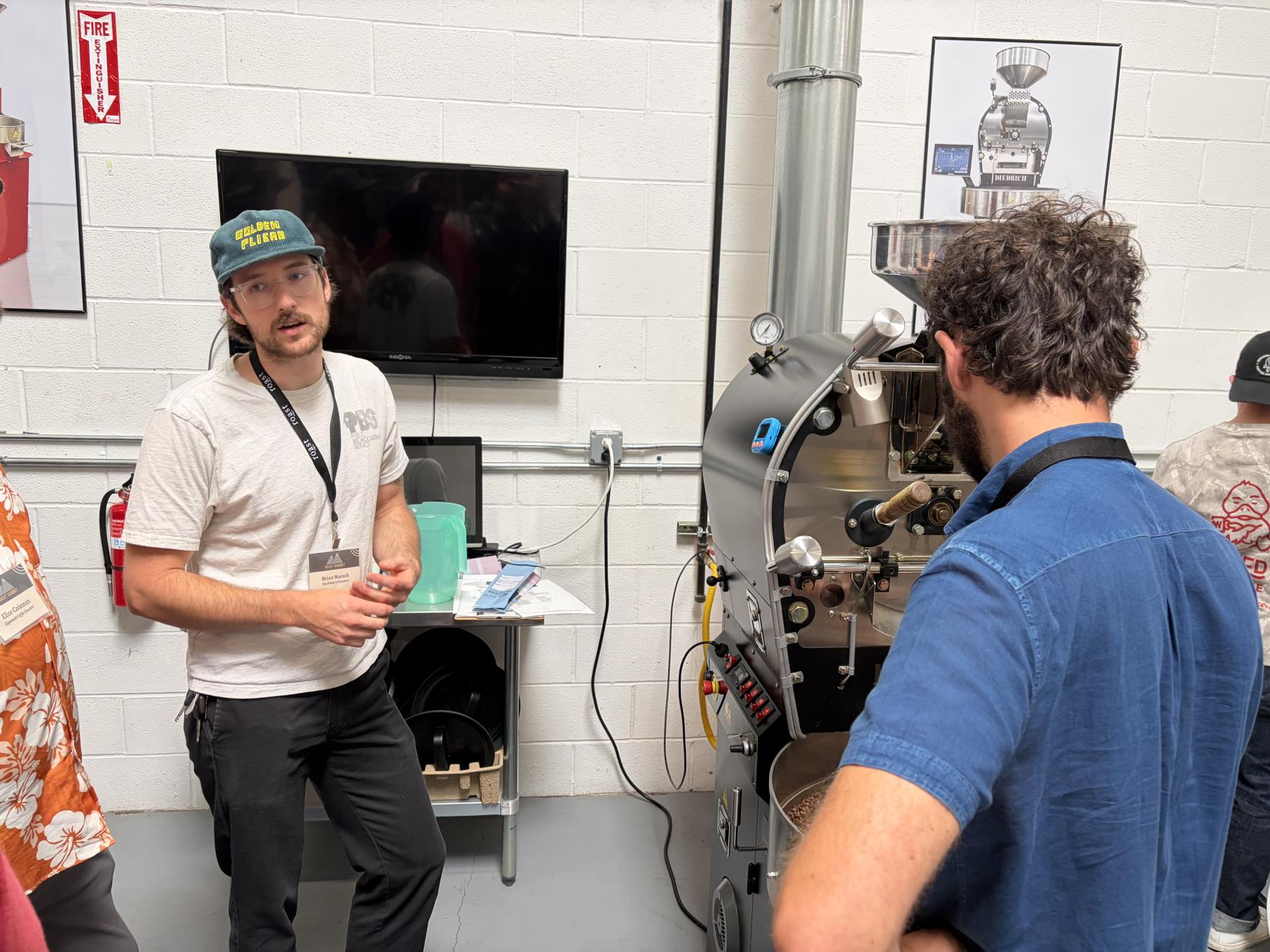
That said, the real value comes from the conversations happening alongside the roasting. Being surrounded by experienced roasters – many from leading companies like Huckleberry Roasters and Intelligentsia – creates a unique environment for learning and problem-solving. Getting to go in depth on roasting theory with your peers is one of the biggest bonuses of Roast Summit.
-
- A newer DR12 model with full automation
-
- Brian Nutsch from Huckleberry in Denver
-
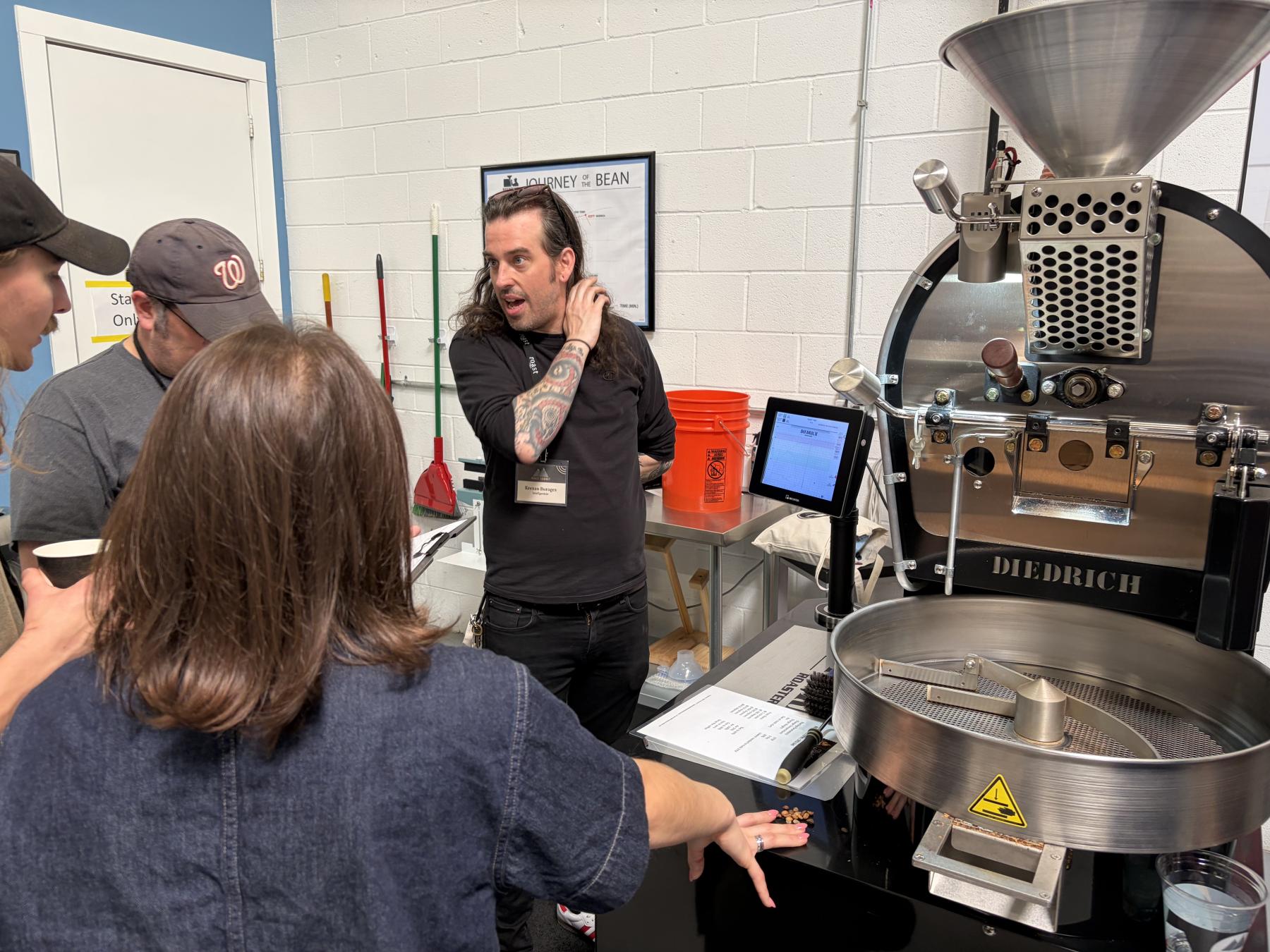
- Keenan Burages from Intelligentsia talking roasting
-
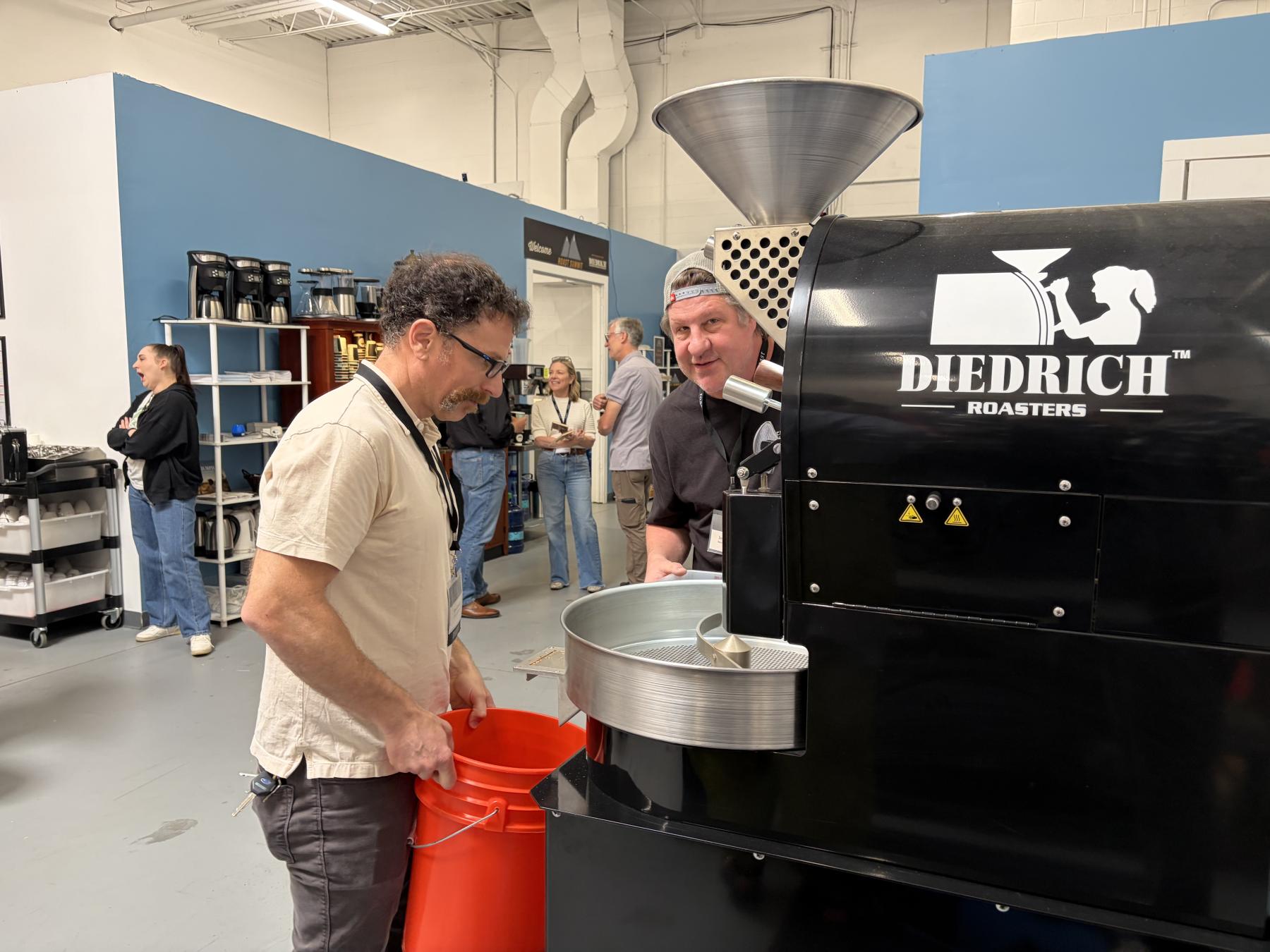
- Roasting some orange peel co-ferment in the DR3
-
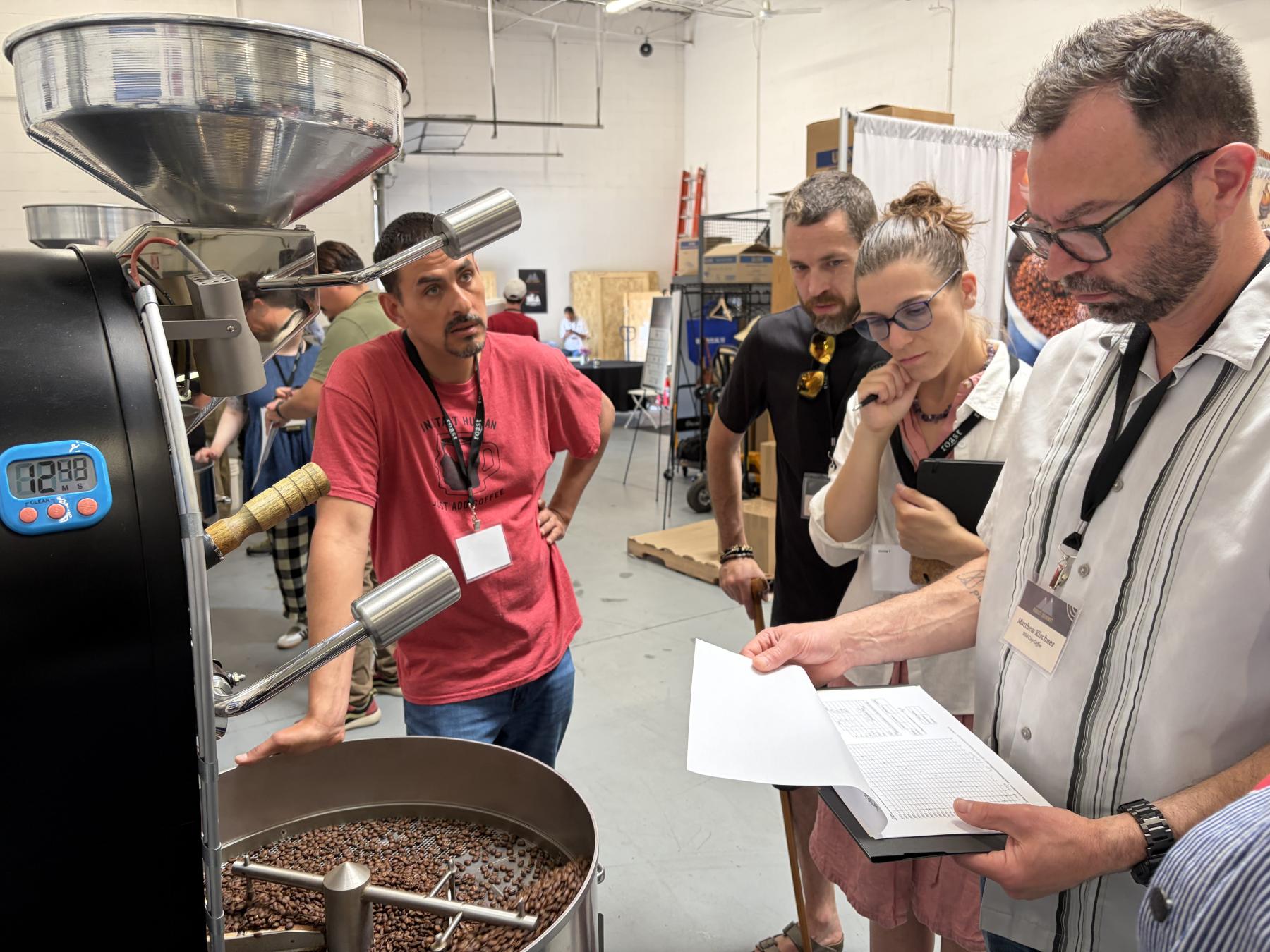
- My group checks the roast log from an IR5
-
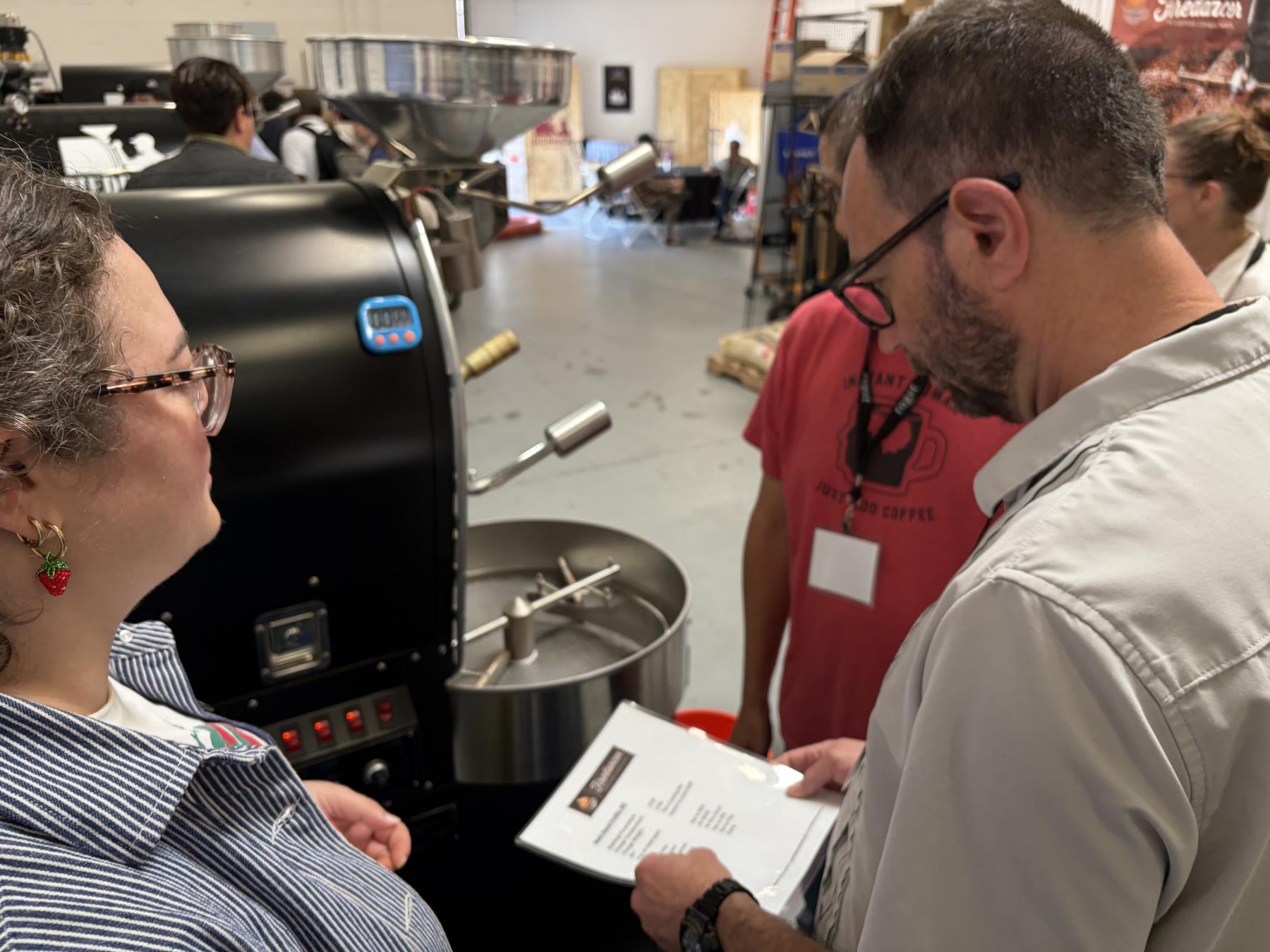
- IR5 Roast underway
-
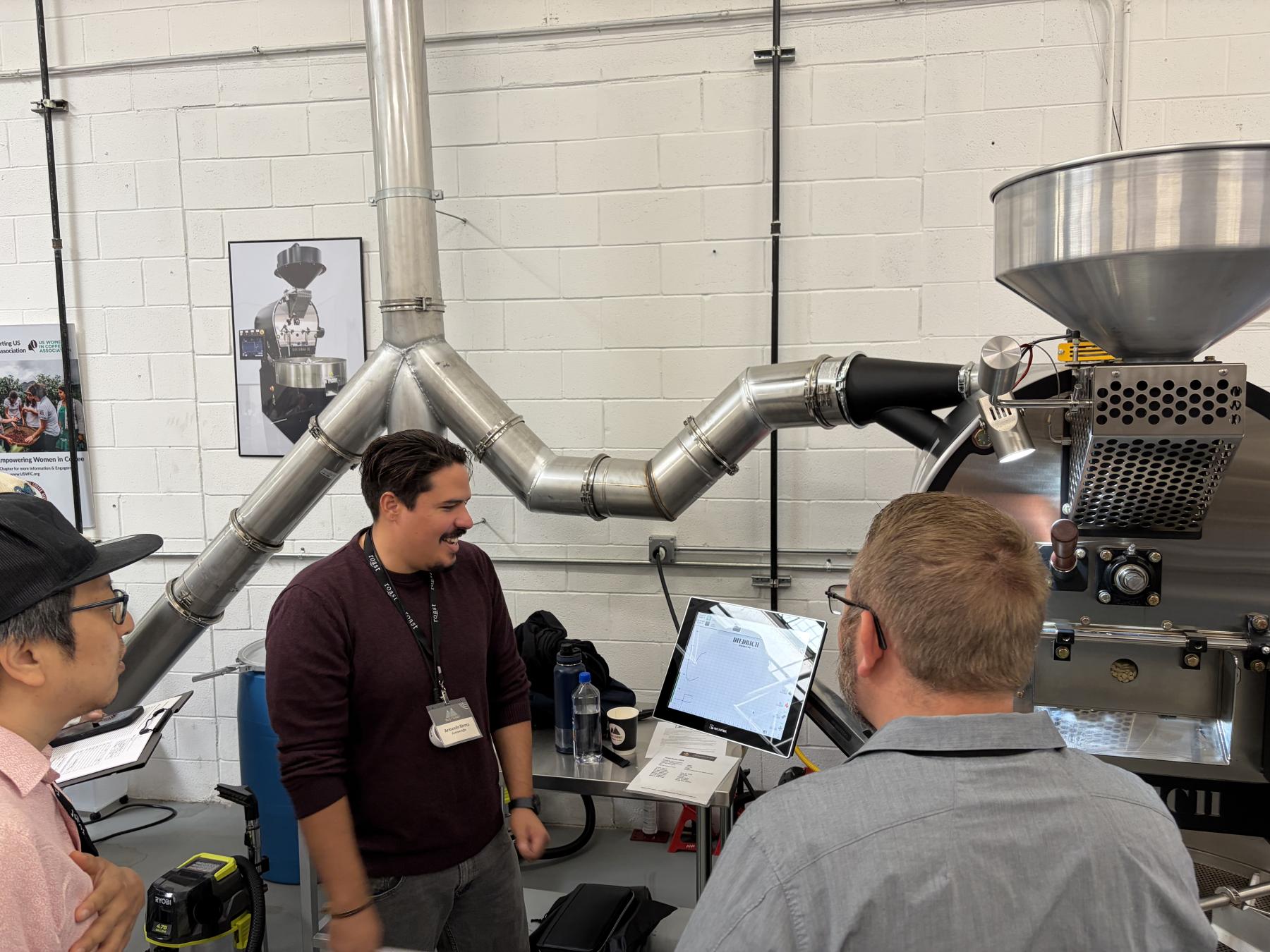
- Armando Rivera from Factotum Coffee tracks roast progress
-
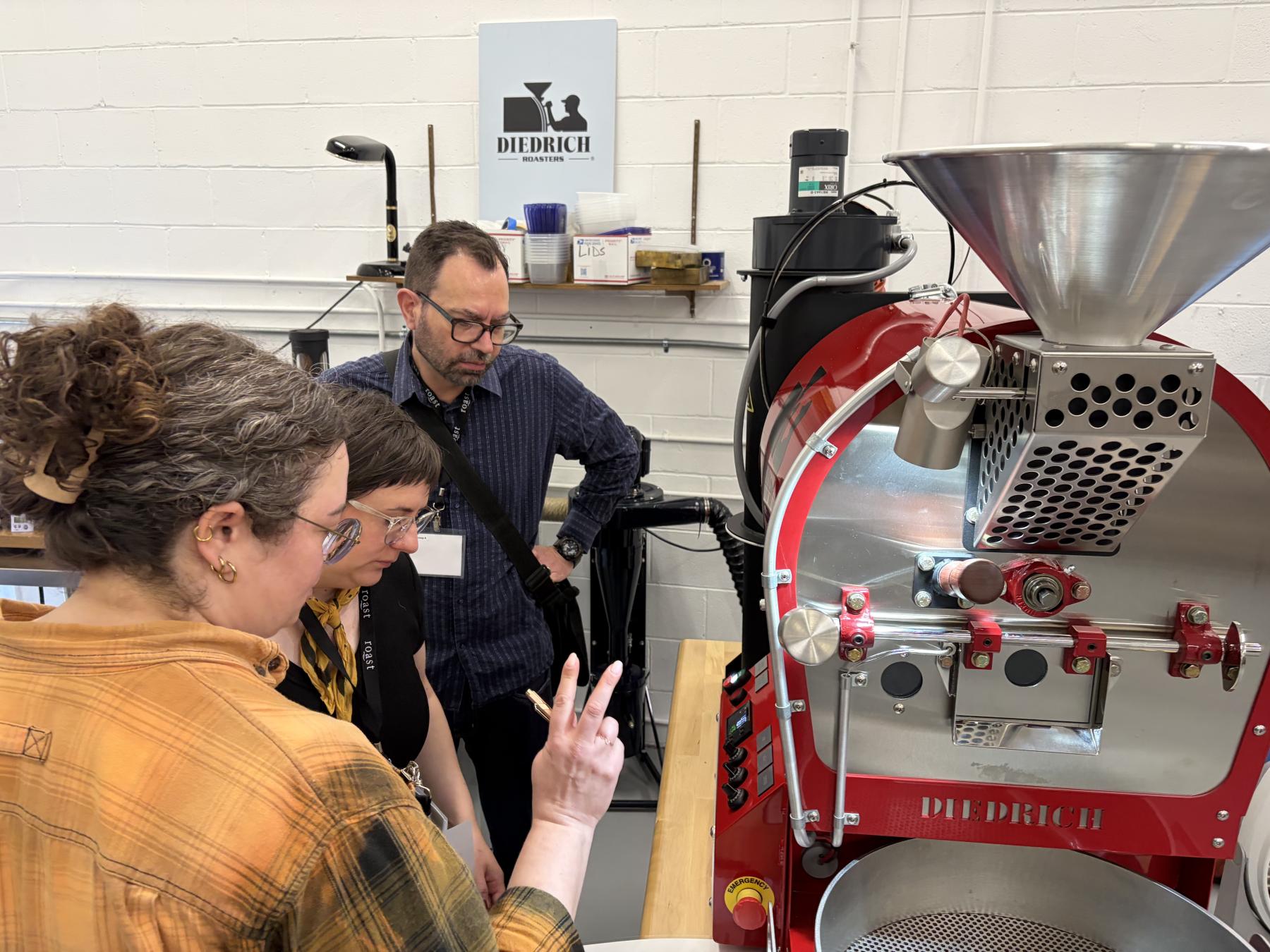
- Getting time on the electric DR3
-
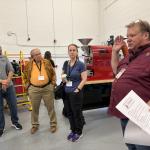
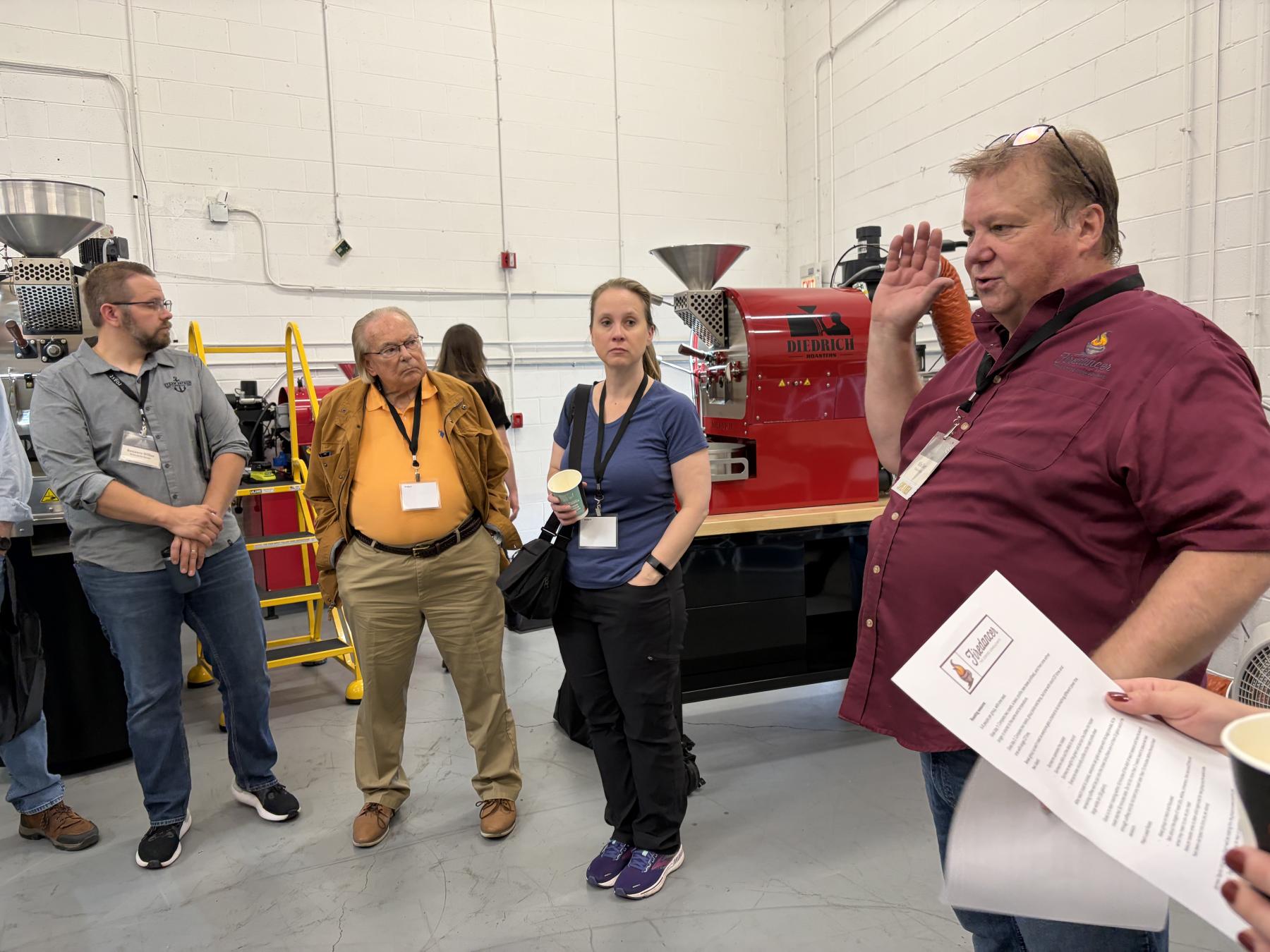
- Mike Ebert kicks off the roasting session
Sensory Training for Roasters
Coffee involves all five senses and, depending on who you ask, maybe even a sixth sense! But you must be cupping if you’re a roaster. Roasting without cupping is a fool’s errand, so the Roast Summit was sure to include a dedicated sensory session after the roasting sessions.
Led by Renee Espinoza of Firedancer, this session challenged participants to identify differences between coffees using an advanced triangulation-style exercise. Each participant tasted five coffees alongside a control sample, with the goal of isolating which samples were different and articulating why.
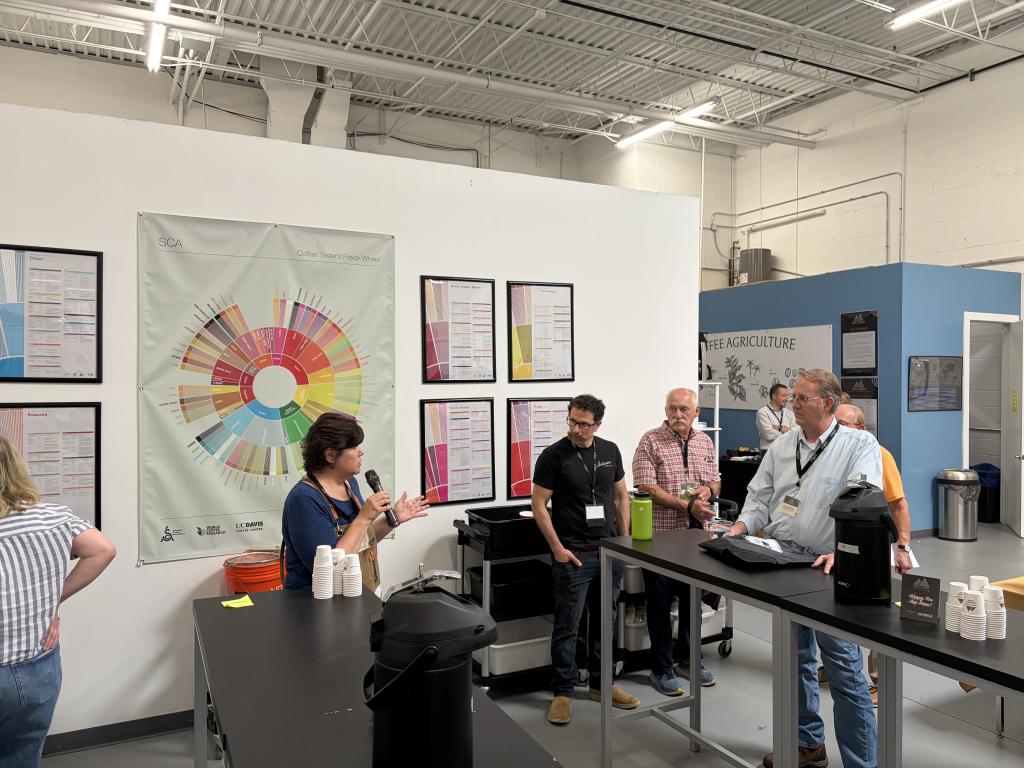
Renee Espinoza of Firedancer presents the blind taste test
The results were revealing. Three of the coffees matched the control, while the two outliers represented an underdeveloped roast (30 seconds shorter) and an overdeveloped roast (30 seconds longer).
Blind tasting like this strips away bias and forces you to rely purely on your sensory skills. It’s a powerful reminder that roasting data alone isn’t enough—you need to connect it back to the cup.
One improvement I’d love to see in future sessions is the inclusion of roast curves or data visualizations alongside the tasting. Being able to link flavor outcomes directly to roast data would make the learning even more actionable.
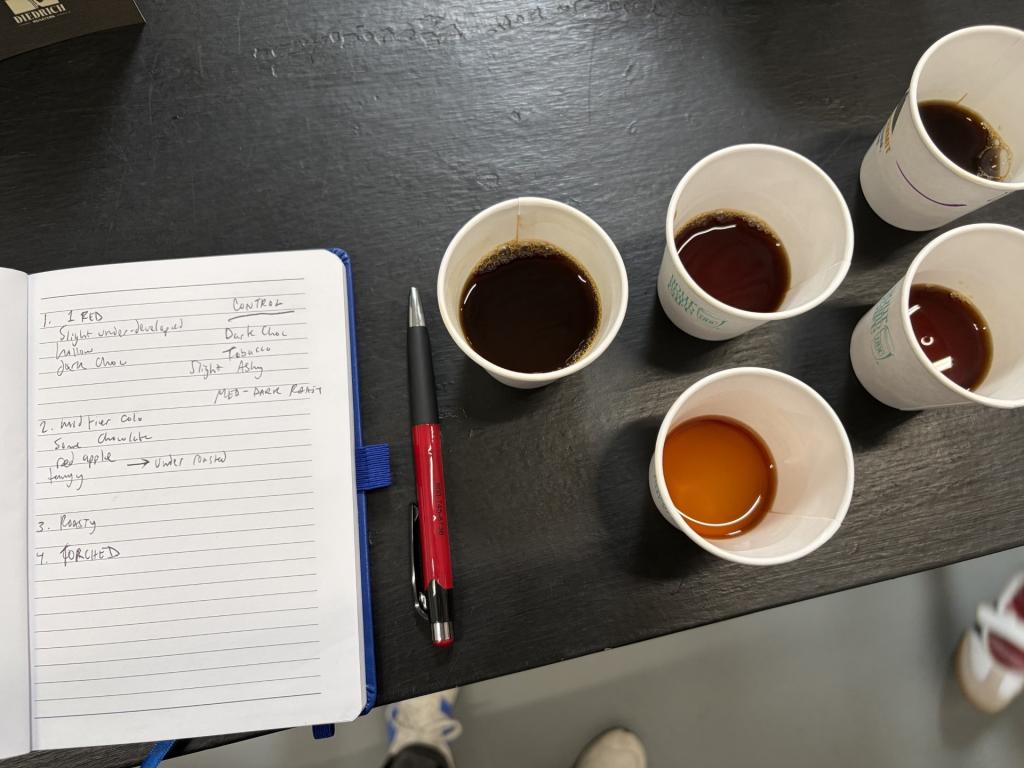
My notes alongside the coffees in blind tasting
Coffee Roasting Insights & Green Coffee Trends
Roast Summit also features a series of presentations focused on coffee roasting techniques, green coffee, and industry trends. The sessions are practical, technical, and rooted in real-world applications.
Here are two standout presentations:
Roasting Decaf Coffee to Develop Flavor
Mike Strumpf of Swiss Water delivered a compelling session on roasting decaffeinated coffee. In many roasting operations, decaf is treated as an afterthought—often used to warm up the machine rather than being approached intentionally.
Strumpf shared findings from a 2024 research project analyzing how the Swiss Water process alters green coffee structure. One key takeaway is that decaf coffee is already structurally compromised at the cellular level, making it more responsive to heat during roasting.
This makes decaf easier to push—but also easier to mishandle.
The broader message was simple: if you approach decaf with the same level of care as other coffees, you can significantly improve quality. And even if customer demand feels limited, improving your decaf offering raises your overall roasting standards.
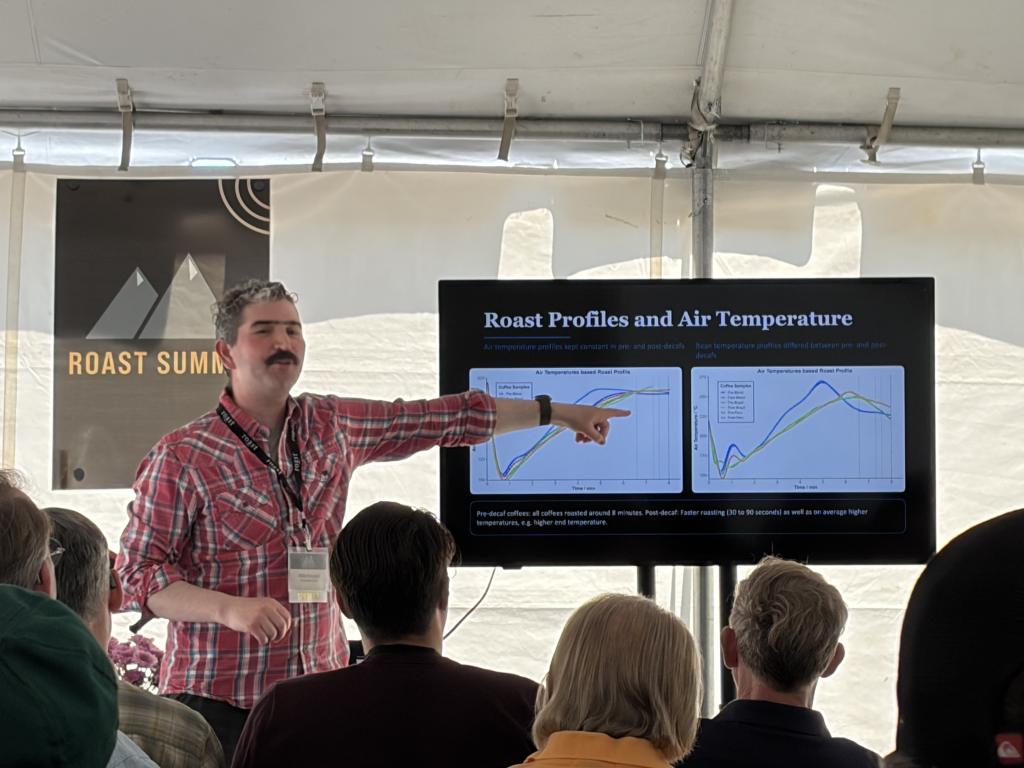
Mike from Swiss Water presents on roasting decaf for flavor development
“Reposo Process” and Extending Green Coffee Shelf Life
In another standout session, Café Kreyol’s Joey Stazzone presented research on extending green coffee shelf life through a process called “reposo,” or resting the coffee at origin.
Working with researchers at NC State University, the study tracked how resting green coffee for eight weeks at high altitude impacted long-term quality. The coffee used in the experiment came from Bolivia at approximately 4,100 meters above sea level.
At this elevation, reduced oxygen levels slow cellular respiration, helping preserve the coffee’s integrity over time.
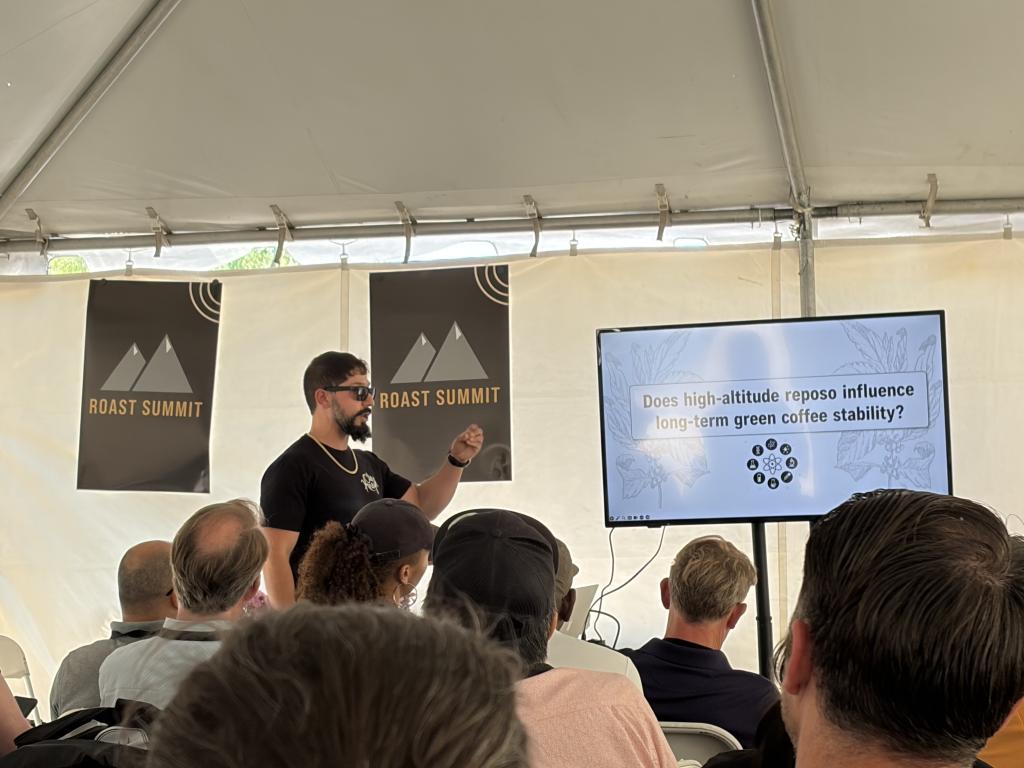
Joey Stazzone from Cafe Kreyol presents on Reposo Process
During the session, we tasted a four-year-old coffee that performed more like a one-year-old crop – a strong proof of concept.
However, there are real-world challenges. Extending rest periods at origin requires producers to delay shipments, which may complicate logistics and cash flow. There are also downstream implications for inventory timing and overlapping harvest cycles.
Even so, the data suggests meaningful potential for improving green coffee longevity – an area that’s becoming increasingly important for roasters managing inventory risk.
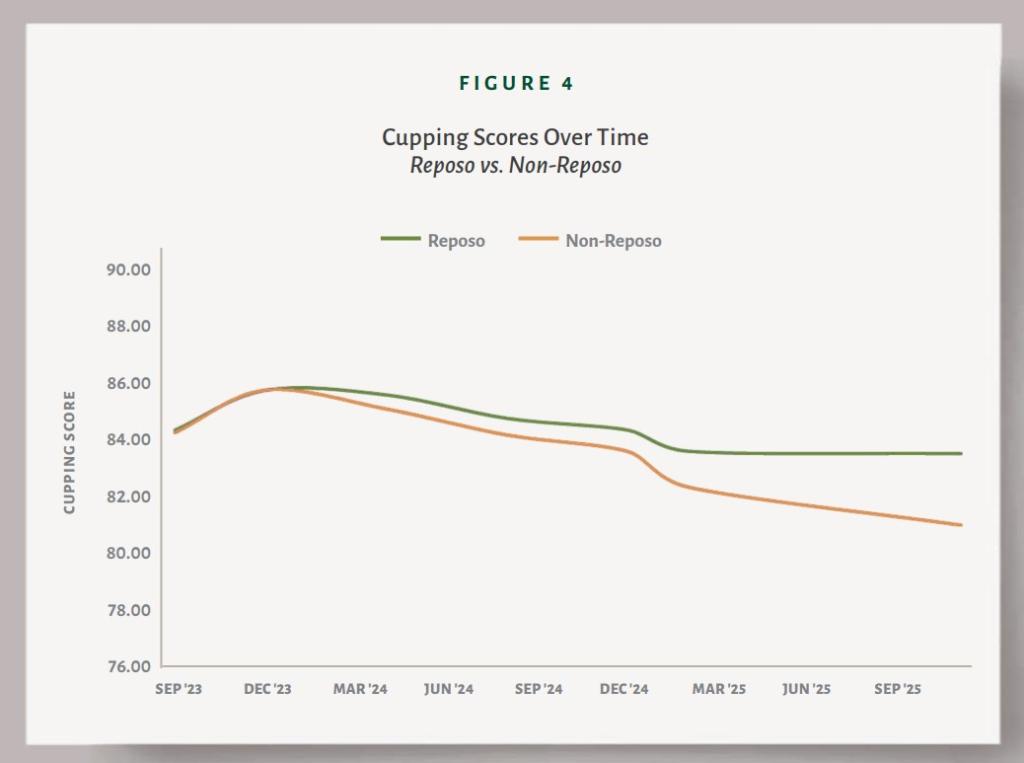
Cup quality of Reposo process vs. traditional over a two year period, courtesy of Roast Magazine
See You at Roast Summit 2027!
Overall, Roast Summit Chicago 2026 delivered exactly what most coffee roasters are looking for: hands-on experience, practical insights, and meaningful industry connections.
The combination of roasting machine access, sensory training, and peer collaboration makes this one of the most valuable educational events in the coffee industry. Whether you’re refining your roasting techniques, evaluating new equipment, or deepening your understanding of green coffee, there’s something here to take back to your own operation.
Upcoming Roast Summit events are scheduled for Portland (October 1–2, 2026) and Melbourne (March 2–3, 2027).
Genuine Origin looks forward to seeing you at the next one.