



Intro by Jen Hurd, Genuine Origin West Coast Sales + Specialty Trader:
Having worked in the Portland coffee scene for nearly 20 years, I’ve been fortunate to get to know so many amazing coffee people. I remember hearing that a roaster was opening a café across the street from Buckman Coffee Factory; a shared roasting space and coffee community hub. I had to check it out and was delighted to meet Andrew Coe, one of the owners of Elevator Coffee.
While the café has changed hands, the roasting business continues to impress. They have never felt snobby or exclusive—they make beautiful coffees accessible and continue to support the growth of their team. From roasting competitions to cycling events, they’ve solidified themselves as a very humble and talented bunch of coffee pros.
I’m delighted to continue to partner with Andrew and Jarrod at Genuine Origin and whether you’re looking for a facemelter experimental process or a cozy, chocolatey washed coffee, there’s no doubt they’ve got something thoughtfully sourced and roasted that you’ll enjoy.
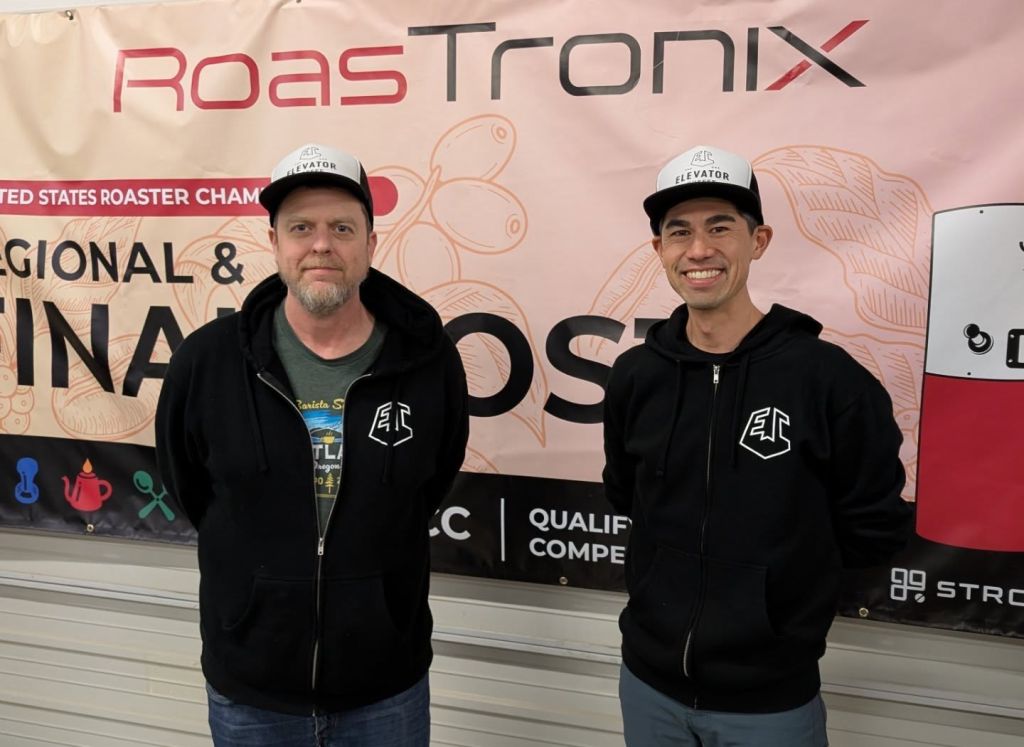
Jarrod Smith and Andrew Coe of Elevator Coffee
The following is a conversation between Elevator Coffee’s Andrew Coe and Genuine Origin’s Steven Edwards.
Steven Edwards (SE): Can you tell our community a little about your company?
Andrew Coe (AC): Elevator Coffee is a small, quality-driven roaster focused 100% on direct to customer and wholesale coffee. Our goal is to have some of the best customer service in addition to great coffee. We tend to carry 5-6 single origin coffees at a range of price points, processing methods, and flavor profiles.
Elevator is owned by two seasoned coffee professionals Andrew Coe (me) and Jarrod Smith. I started in coffee in 2007 – but I took a 9 year break as a civil engineer. In 2023, I was the US Roasting Champion and went on to place 3rd at the 2023 World Coffee Roasting Championship, the highest finish ever by a US competitor. Jarrod started in coffee in 2011 and he has also competed in roasting competitions. He finished 9th at the 2025 USRC finals.
SE: When did you first get into coffee, and what do you remember about it?
AC: I started in coffee in 2007 at Tully’s Coffee in Magnolia (a Seattle neighborhood). It was the first time I had coffee I liked drinking and that tasted great. Jarrod got started in coffee in 2011 as a dishwasher/warehouse person for an office coffee company. He quickly became interested in trying as many coffees as he could and within a few months, was working in sales and customer service and doing multiple in-office coffee tastings per week.
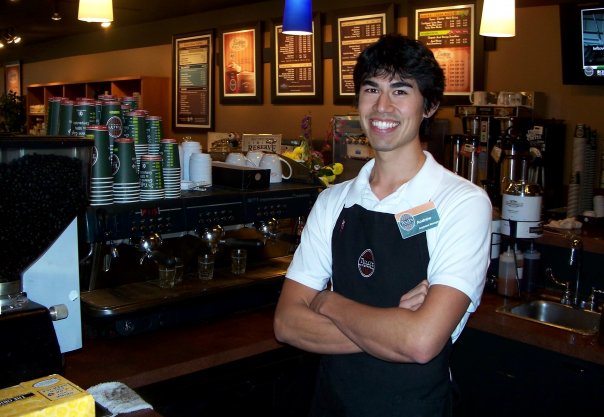
Andrew at Tully’s in Seattle circa late 2007
SE: How did your company, Elevator, get started?
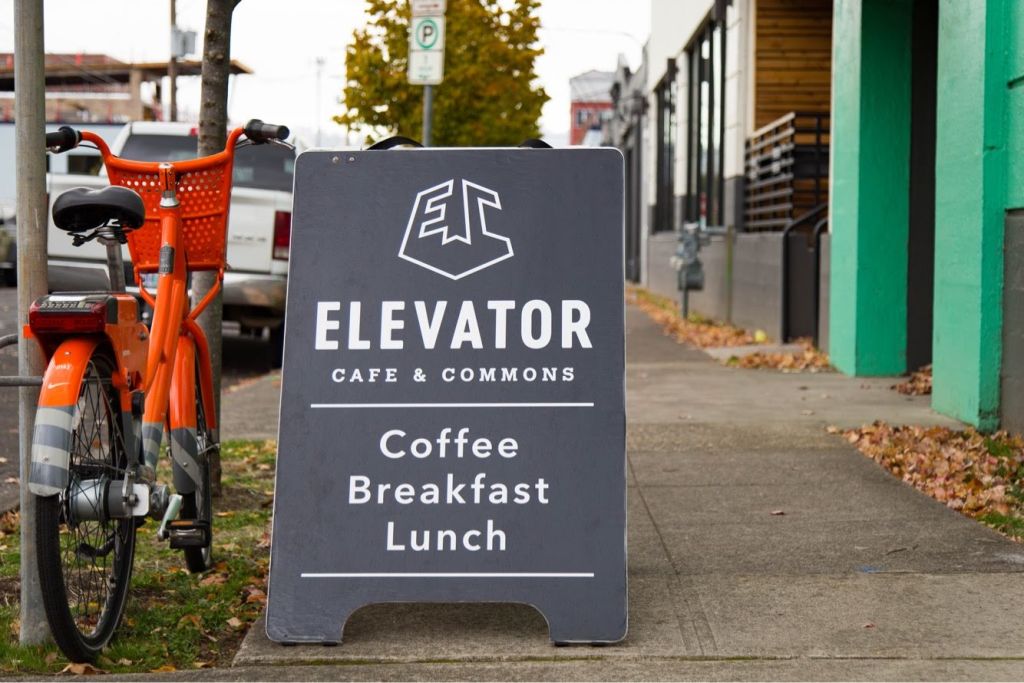
AC: Elevator Café & Commons was founded in 2016 as a coffee shop serving Coava Coffee. We didn’t start as a roastery, though it was a goal from day one. I won a Portland area roasting competition that winter, and that started Elevator’s roasting program. We closed the café in 2020 during the pandemic and focused 100% on our roasting.
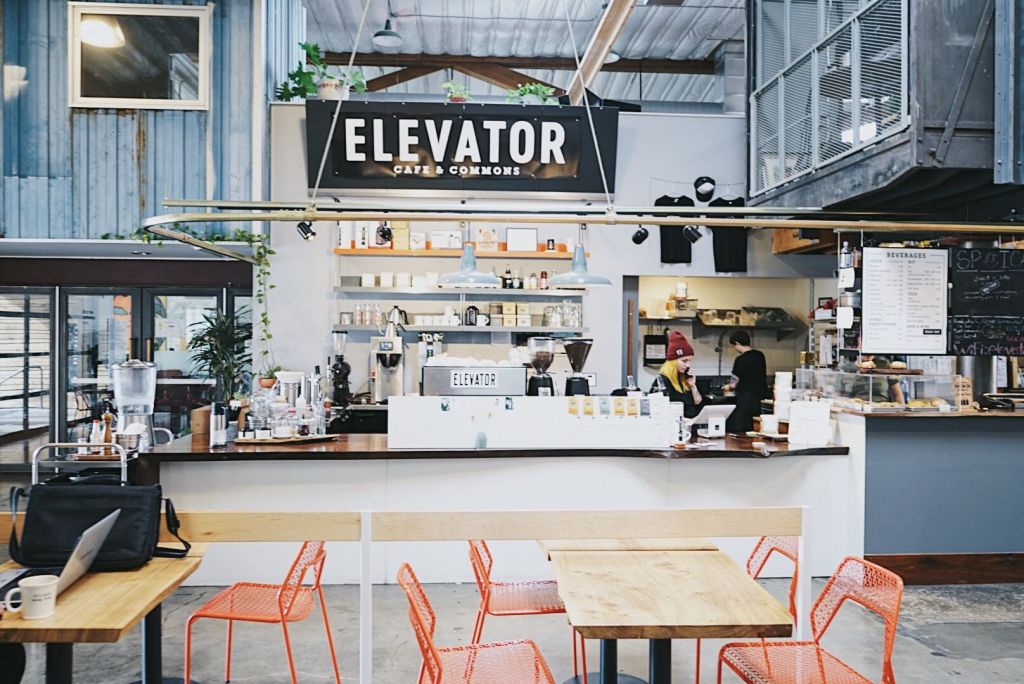
Elevator’s original cafe location in 2016
SE: What kind of roaster are you working on?
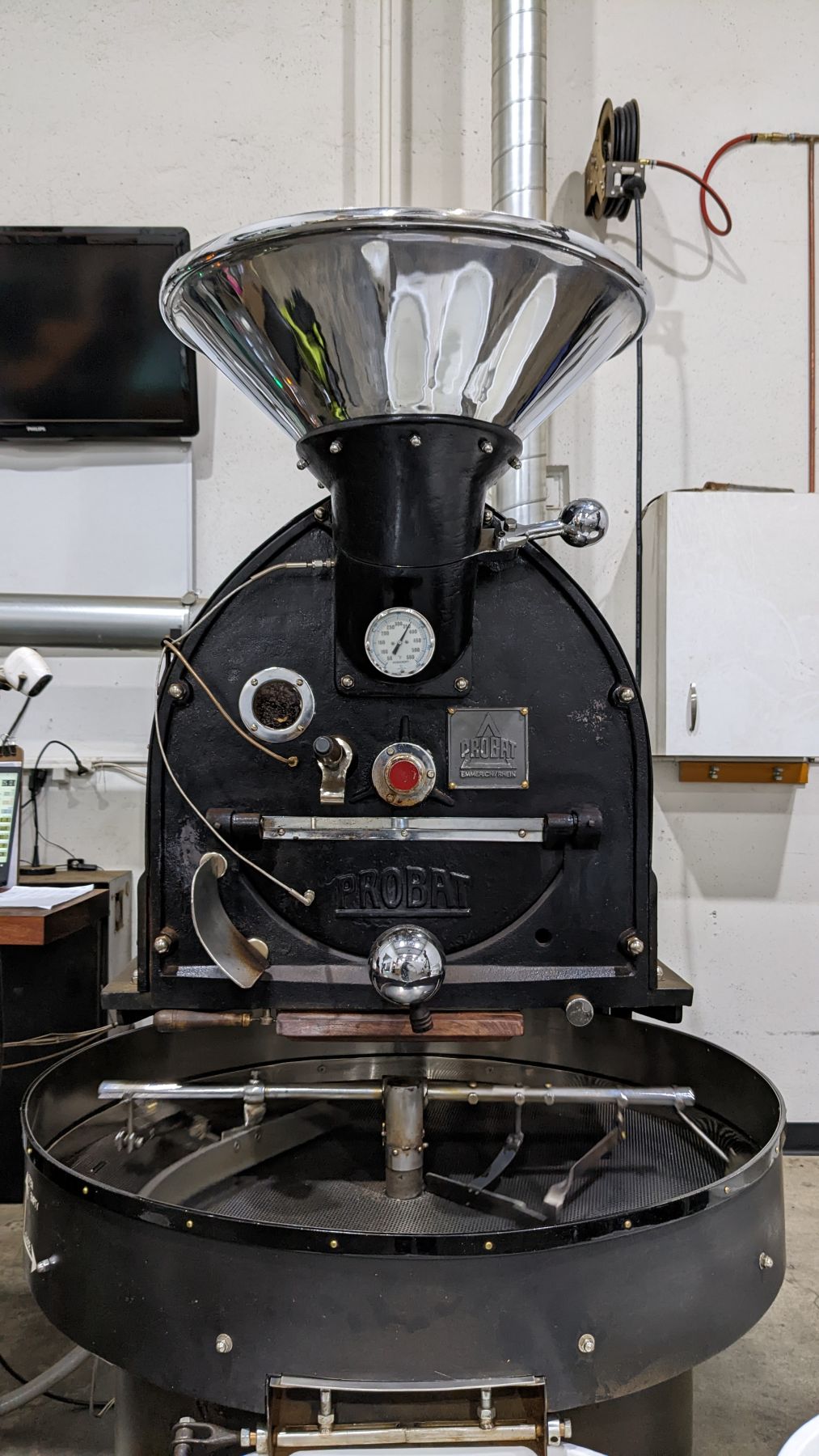
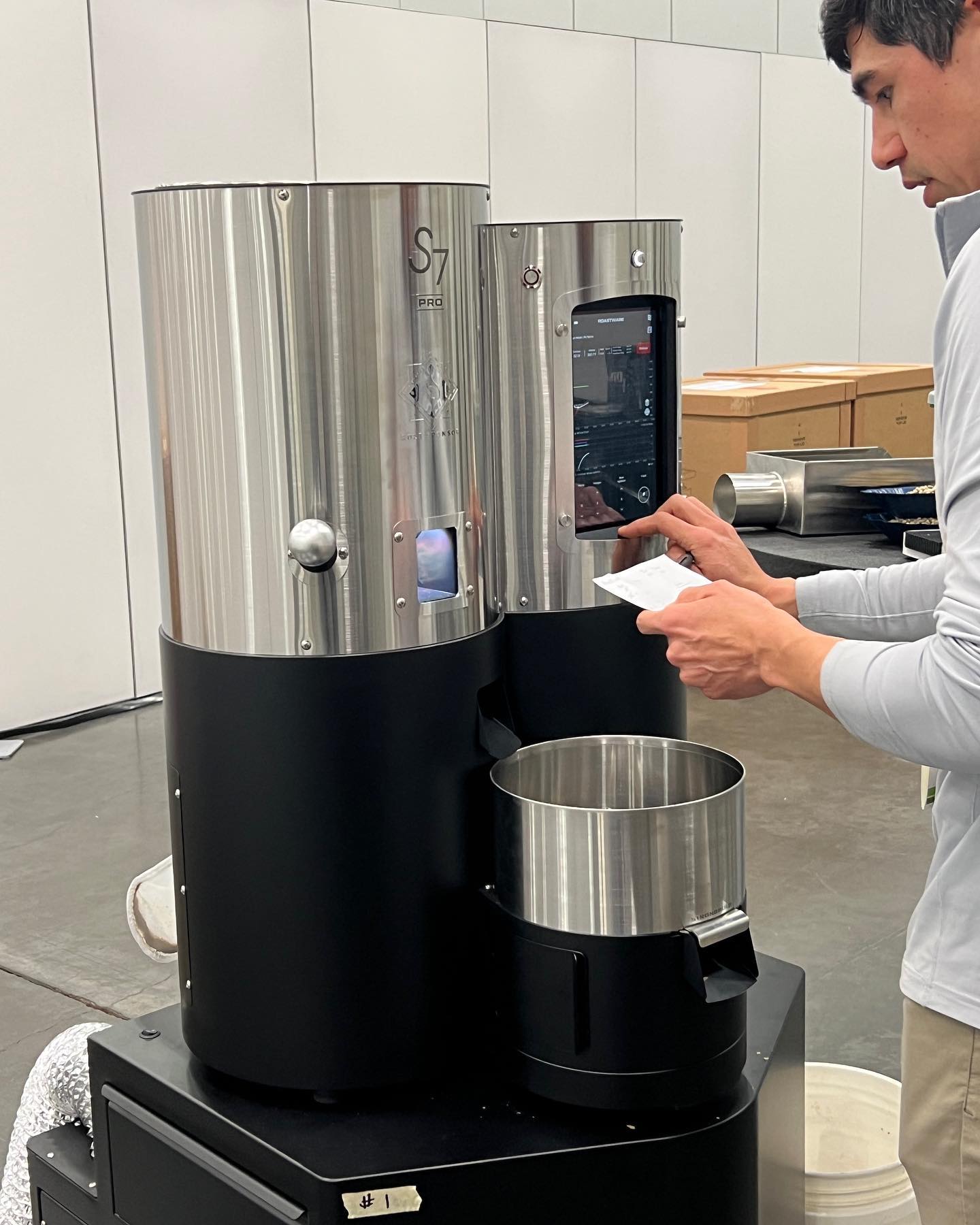
AC: Our workhorse roaster is a fully modernized 1933 12kg Probat. It features custom burners, variable fan and drum speeds, and a full set of thermocouples measuring BT, ET, Inlet temp, air pressure, and cooling tray. It was, at one time, owned by Alfred Peet. We also have a Stronghold S7Pro for some limited smaller lots.
SE: Do you treat roasting as an art, a science, or a combination?
AC: Roasting is awesome because it is both an art and a science! Our roasting approach more data driven (partly because I have bad allergies and can’t always rely on the trier for reliable information). We rely heavily on consistent between batch protocol, and use end time, end temperature, weight loss, and roast colors (interior and exterior) as our indicators that roasts are within our QC spec. We also have a database including every roast we’ve ever done, with all the QC metrics, which help us quickly create new recipes when we bring in new coffees.
Recently, we’ve also been taking more measurements of our green coffees to see what additional insights we can gain from this. From these measurements, our most useful application has been using moisture readings to help us set weight loss targets for sample roasting.
The art part is applying the science strategically to get the results you want with the coffee. You can’t create flavors that aren’t there, but you can use different roasting techniques to “turn up” certain characterizes. There are always trade offs to every roasting decision, because every decision has multiple effects.
Our roasting style aims for balance, which we find in the light to very light roast range for most coffees. We want acids, sweetness, and complexity to be our primary notes people can resonate with.
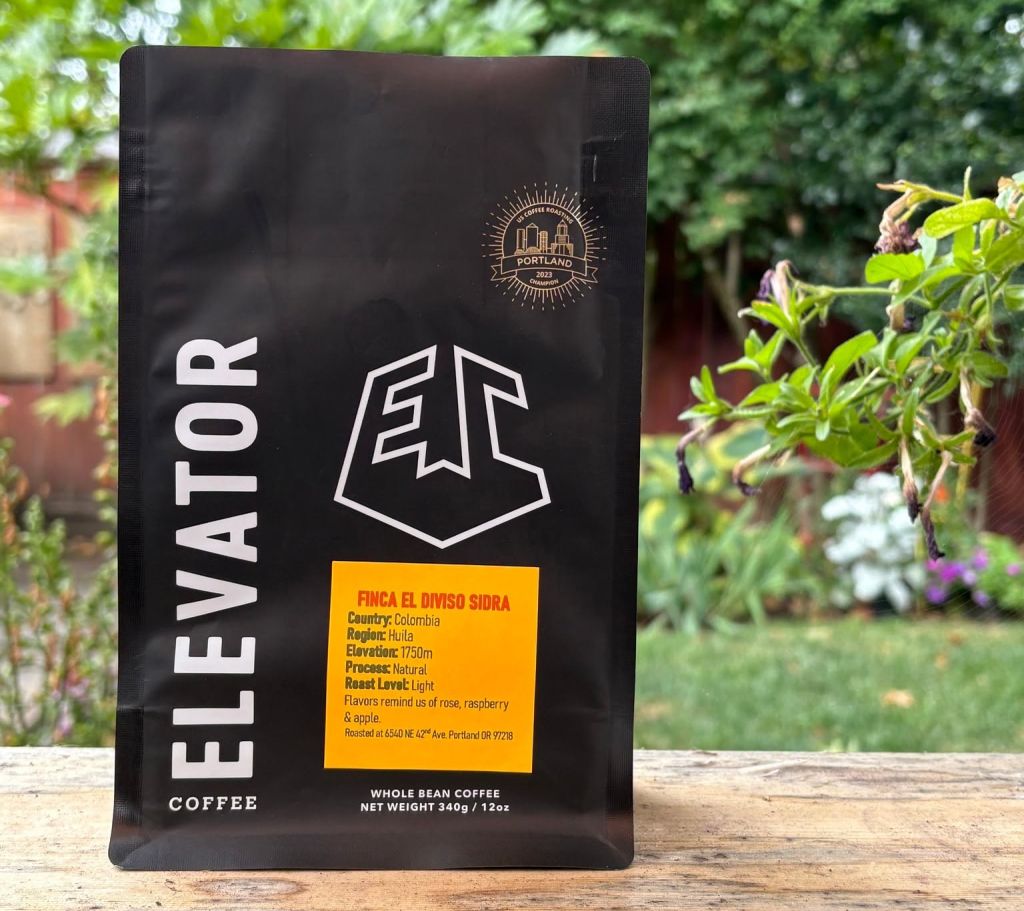
A bag of Finca el Diviso Sidra, sourced from Genuine Origin
SE: Do you have any wild antithetical or “tin-foil hat” theories about roasting?
AC: If you have to stop a roast before it’s done roasting, you can probably put it back in the roaster and still get something drinkable out of the end result. If you get lucky, it can actually taste pretty good. I know this because I was overloading the Stronghold S7Pro with a natural process, and the halogen caused the chaff to catch fire inside the machine about halfway into the roast. This caused an emergency stop and then ejected the coffee. Turns out you can feed the coffee back into the roaster, and resume, and still get a pretty good roast out of it (try at your own risk).
-
- The modified 1933 12k Probat
-
- Andrew at work on the Stronghold S7 Pro
SE: Where do you think your roasting company is headed in the next five years?
AC: We plan to electrify our roasting processes. There are some very intriguing electric roasting machines available now that didn’t exist when we got started. Having most of our power generated by solar on site would be a longer term goal. We have also slowly been widening our menu to include more experimental and top end competition lots.
SE: Are there any words of wisdom you’d like to give to those who are in the business of coffee or are thinking of jumping in?
AC: Learn from others and, particularly, learn to taste coffee with others. Work for someone else in coffee before starting your own thing. Coffee is still in many ways a game of inches.
SE: Where do you think coffee is headed in the next five years?
AC: It looks like great coffee is continuing to get more expensive. I think that will continue, both because global demand is increasing but also because climate challenges will continue to restrict supply. I think producers will continue to innovate and find ways to create value which will give us new types of coffees to work with.
SE: For you, what is one absolute DO and one absolutely DO NOT in coffee?
AC: Absolute DO: keep learning and be humble. Absolutely DO NOT: tell producers how to do their jobs.
SE: What’s the best coffee you’ve tasted in recent memory?
AC: The Sumatra Gajah Natural has been the most surprising coffee we’ve tried in some time. It’s the first Sumatra we’ve bought in over a decade; the high notes of strawberry and hibiscus are so balanced. We found at World of Coffee that it was a coffee we were the most excited to tell others about.
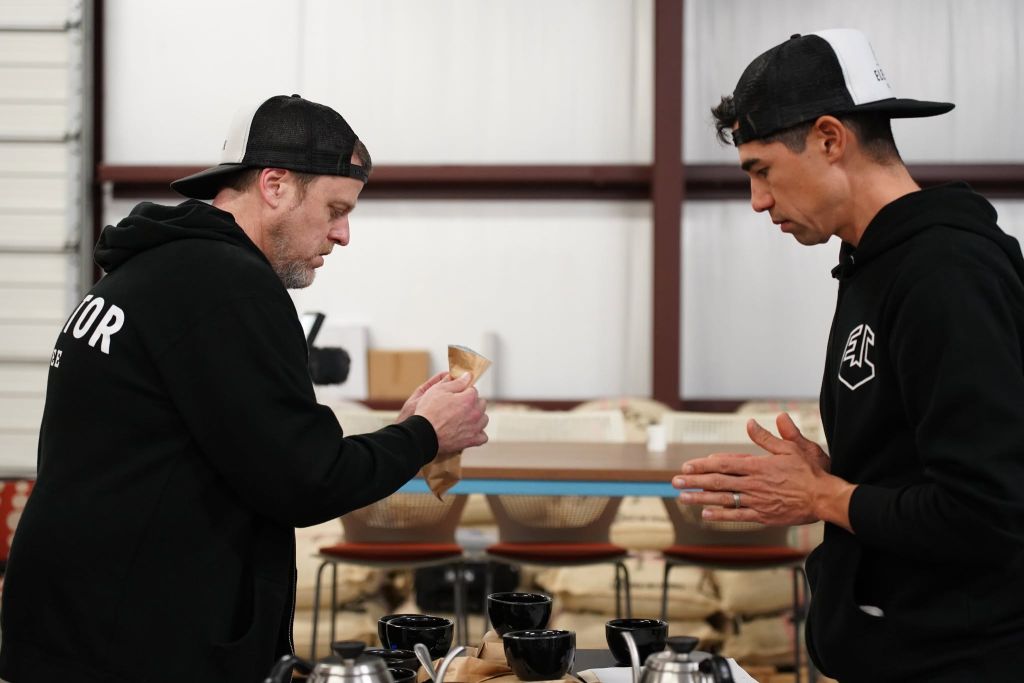
Jarrod and Andrew cupping coffees
In 2023, Andrew from Elevator won the US Roaster’s Championship. Both Andrew and Jarrod compete in roasting competitions regularly, so they are in a unique position for coffee roasters. We asked them some questions about what it’s like to compete and to actually win.
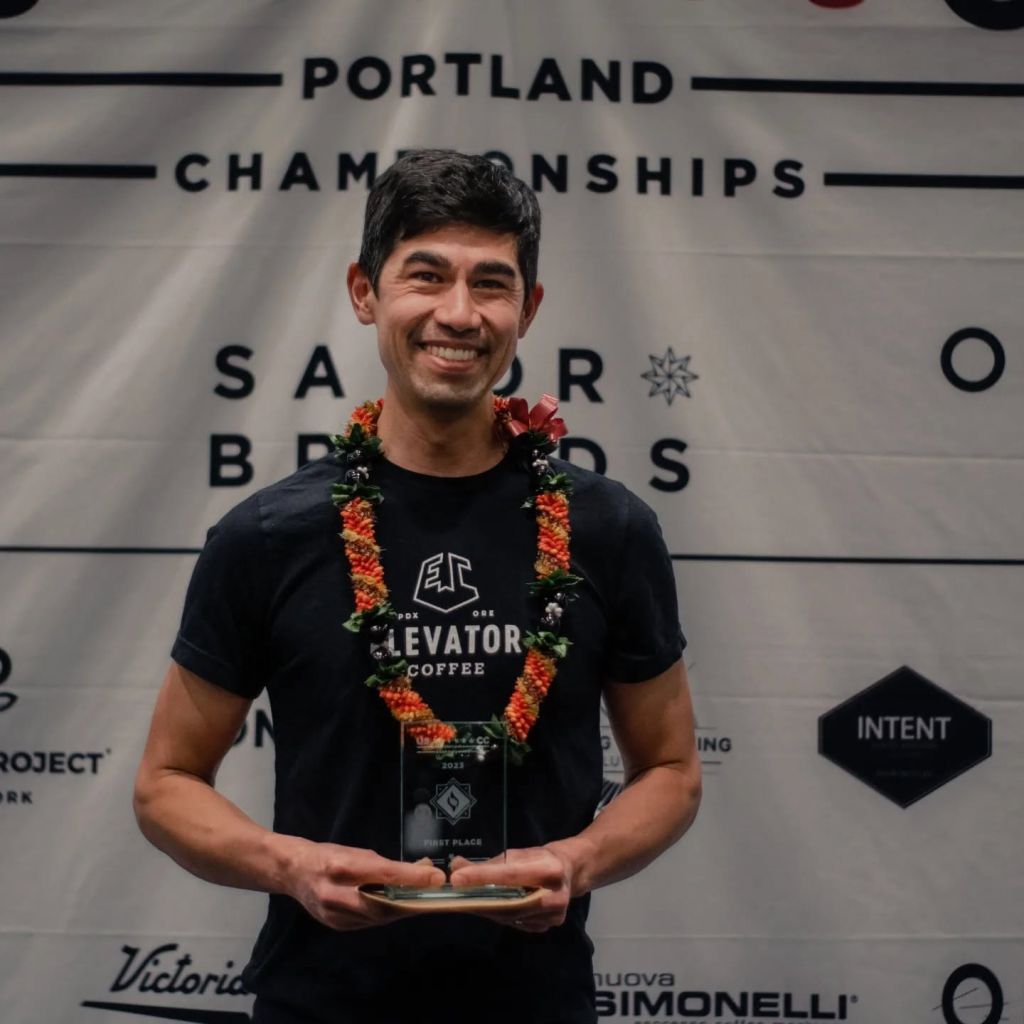
Andrew was the US Roasters Championship in 2023
SE: How did you know that you were ready to compete in roasting competitions, and what gave you the idea to do it?
SE: How do you prepare for something like US/World Roaster’s championship? What’s the most daunting part of it?
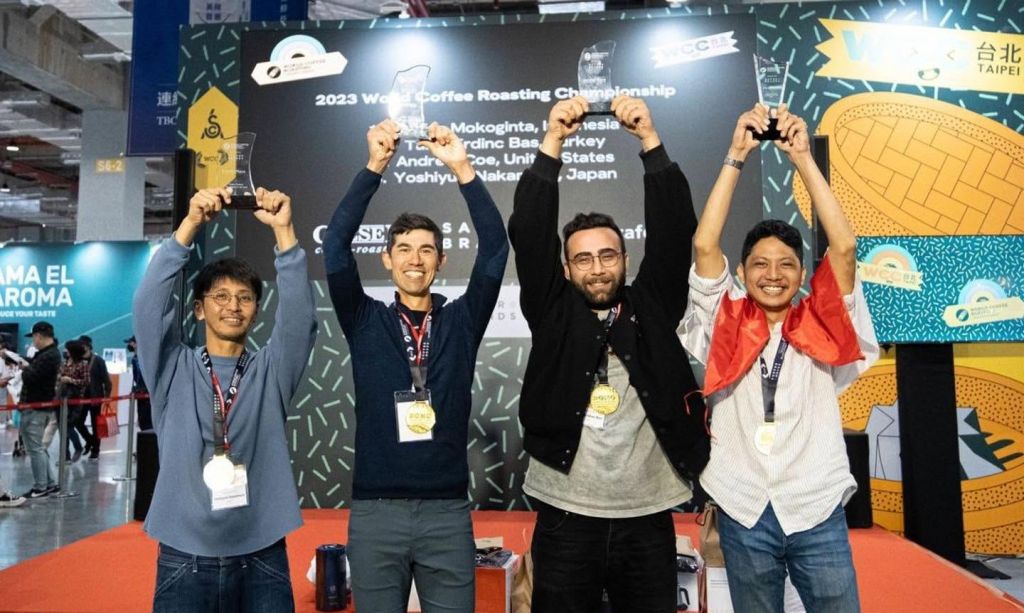
Andrew’s third place finish at the World Roasting Championship
SE: What is your process and approach when going into a roasting competition? Do you think about the other competitors and adapt at all, or do you lock in on your own process?
SE: What is it like to actually win?
Even though I had done well the year before, winning in Portland was like coming full circle. The reason I started competing in the USRC competition was that the 2020 season was supposed to have finals in Portland. I just wanted to qualify and participate in the finals at home. That season finals were cancelled by COVID, then the year afterward was also cancelled. Instead, I got my first finals experience in Boston in 2022, where I finished 5th.
The next year, finals were back to Portland, and I immediately made that the goal for the year. The expo and competition were the funnest event I had done at that point.
The announcements of the awards felt like it went forever. With every passing place they announced, I felt the probability that they were going to call my name decrease. A second before they announced the winner, I completely doubted it would be me, because there were so many other talented roasters who were not in the top 6. Having my name called for first place, and walking up to the podium, everything felt like it was in slow motion.
Immediately afterwards though it’s like everything went into double speed, I was rushed into several interviews and my phone blew up. All the attention was overwhelming. I almost felt detached from what was happening, and I have no idea what I said in those interviews. It was also very emotional – the past few years had been very hard (to say the least). My wife’s work had exploded from the pandemic (she is a physician), then we had closed our cafe to focus only on roasting in the winter of 2020, and a few months later, my mom passed away.
Winning also earned me a spot at Worlds in Taipei, Taiwan. My dad grew up in Taiwan and moved to the United States to go to pharmacy school. He was able to travel with us to Taiwan and be our travel guide, which was the coolest thing I could imagine. Finishing 3rd there was surreal again, but I was able to soak it in and be present in the moment.
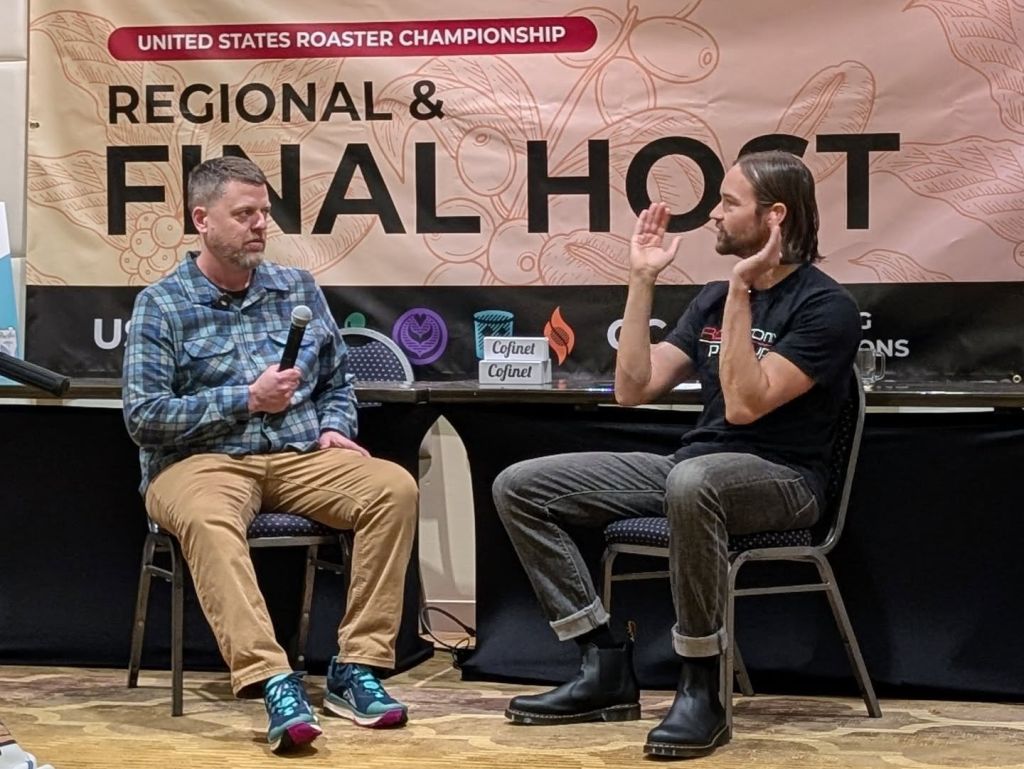
Jarrod speaking at the USRC 2025
SE: Is there any advice you would give to roasters who are trying to compete in the future?
AC: First, I would say, try it. Think of it as a learning experience and you will win regardless of the outcome. Competition forces you to think about all your assumptions, and you’ll meet a great community of fellow roasters who are also trying to improve themselves. Second, if you are going to do it, learn the rules and prepare as best as you can. Knowing how you are being scored helps the process feel more manageable. Third, keep in mind that your placing in any competition doesn’t mean you are a good or bad roaster.
Competitions like USRC have judges calibrated to modern light roast specialty coffee. You could be the best dark roaster in the country, but if you turn in an exceptional dark roast at the competition it may not score well. Fourth, know your judges (as best as you can). One of the good things about having qualifying rounds (typical seasons have several rounds of competitions) is the ability to get to see how the judges evaluate coffee. Fifth, if you want to compete at USRC, know that the registration slots fill up SECONDS after the spots open. Set your calendar and be ready to register the moment it opens.
About Elevator Coffee
Readers can support Elevator Coffee by ordering coffee at elevator.coffee, or learn more by following their journey and staying updated on their Instagram. Find them in physical locations at these stores around Oregon, Washington, California, and Utah.